Laudato Si Voices | COP31 lessons | The Real Shift Must Begin at Home| 23/11/2026
By moving beyond the gains and disappointments of international climate negotiations, Africa must embrace a new era of community-led climate action, cultural conservation, youth leadership and domestic resource mobilization.
The 31st Conference of the Parties (COP31), held in Antalya, Türkiye, has ended. Once again, the world gathered to negotiate, deliberate and seek common ground on the climate crisis. Yet, the conference concluded on 22 November 2026 without consensus on an overarching political agreement.
Disagreements over fossil fuels, climate finance and the proposed Antalya Pact exposed the continuing difficulties of achieving international consensus. Nevertheless, progress was made on some negotiating decisions, including just transition, while other important matters remained unresolved (International Institute for Sustainable Development [IISD], 2026; United Nations Framework Convention on Climate Change [UNFCCC], 2026). This outcome presents an important moment for reflection for us as stewards of the future.
Perhaps the most important lesson from COP31 is that it is not always the gain that matters most, but the shift that follows.
The real question is not simply what countries achieved or failed to achieve in Antalya. It is what governments, institutions, communities and individuals will change because of the experience.
When Pope Francis published the encyclical Laudato Si’ in 2015, his message was not simply about appreciating nature or becoming environmentally conscious. It called for a fundamental shift in humanity’s relationship with creation. It was a call to ecological conversion, collective responsibility and action (Francis, 2015, paras. 10–16). In paragraph 13, Pope Francis writes:
“Young people demand change. They wonder how anyone can claim to be building a better future without thinking of the environmental crisis and the sufferings of the excluded” (Francis, 2015, para. 13).
More than a decade later, this message remains visionary and a compass for good decision-making.
1. From Global Negotiations to Domestic Implementation
The outcome of COP31 reminds us that international climate cooperation remains necessary but cannot be the only vehicle for climate action. Countries may disagree at the negotiating table, but climate change does not suspend its effects while governments negotiate.
For instance, our farmers in Uganda continue to experience changing rainfall patterns. Communities face floods, which have diverse effects on school-going children, as well as droughts and declining agricultural productivity in some regions of our country. Forests and biodiversity remain under pressure, while vulnerable populations continue to bear disproportionate environmental and economic costs (Food and Agriculture Organization of the United Nations [FAO], n.d.; World Bank, 2021).
A recent and important development in Uganda has been the growing emphasis on adopting renewable energy sources. However, local communities are still struggling with this transition because many households cannot afford the necessary technologies and infrastructure. Uganda’s Energy Transition Plan recognizes the importance of achieving universal energy access and identifies off-grid solutions as important for reaching households facing affordability and infrastructure challenges (International Energy Agency [IEA], 2023).
Another interesting fact is that many of these communities have neither the resources nor the representation to participate practically in international climate negotiations. The Laudato Youth Initaitive argument is some lack a permanent institutional platform through which their environmental challenges can reach national decision-makers. This raises an important question:
Why can’t countries establish decentralized climate and environmental action desks across their regions and districts?
These desks would provide a structured mechanism for documenting local environmental challenges, mobilizing community responses and connecting regional priorities to national climate policies. They could support environmental education, community adaptation programes like the one being talked about in Bamutakude Village as a model, indigenous knowledge documentation, climate-risk monitoring, and access to climate finance mechanisms for young people’s initiatives that are creating real community and institutional impact and driving a cultural shift towards sustainability.
They would also complement Uganda’s National Climate Change Act, 2021, which provides a legislative framework for coordinating climate change responses and strengthening institutional action (Republic of Uganda, 2021). More importantly, they would ensure that national climate priorities are informed by the actual experiences of communities. Imagine a country where every region has an active environmental desk capable of presenting documented community challenges to national authorities.
The country would then approach international negotiations with more than policy positions. It would bring evidence, practical solutions and the voices of people whose livelihoods are directly affected. This is how we could move from global climate diplomacy to thoughtful domestic climate governance that will inspire equitable global climate action.
2. The Laudato Youth Initiative: Preparing Young People to Become First Responders and Future Implementers
A reflection on our work at the Laudato Youth Initiative always has this in mind: preparing young people to become first responders and future implementers. One of the most important lessons of Laudato Si’ is that ecological conversion requires formation. Pope Francis emphasizes that ecological education must encourage changes in attitudes, lifestyles and relationships with the environment (Francis, 2015, paras. 202–221).
At the Laudato Youth Initiative (LYI), we believe that responding to the ecological crisis requires more than mobilizing young people for environmental campaigns. It requires investing in their knowledge, leadership, technical skills, moral responsibility and ability to take manageable, practical steps every day. Our approach with Laudato Si Clubs (LSiCs) is to empower and form young environmental experts who can become community first responders and future implementers of environmental policies and programes, guided by the principles of Laudato Si’ and Catholic Social Teaching that fits well in SDGs and Laudato Si Goals.
Catholic Social Teaching prioritizes building a just, decent and peaceful society that upholds human dignity and promotes the common good. It applies Gospel values and moral principles to social, economic and political life so that every person can flourish. Its core themes that include:
- Life and Dignity of the Human Person: Every human life is sacred and holds inherent worth.
- Call to Family, Community and Participation: People are social by nature and should actively contribute to their families and communities.
- Rights and Responsibilities: Protecting human rights goes hand in hand with duties towards others and society.
- Option for the Poor and Vulnerable: Society must prioritize the needs of the poor, weak and marginalized.
- Dignity of Work and Rights of Workers: Economies should serve people, with fair wages, safe conditions and the right to organize.
- Solidarity: Humanity forms one global family bound by mutual responsibility and peace.
- Care for God’s Creation: Protecting the environment is a moral duty tied to caring for people today and in the future.
These principles are grounded in the Church’s social doctrine, which emphasizes human dignity, solidarity, participation, the common good and the preferential option for the poor (Pontifical Council for Justice and Peace, 2004). We aim to move beyond preparing young people to participate in climate conversations and instead prepare them to lead environmental solutions and the human growth that comes with building a moral and dignified life in their families and society for the good of all mankind.
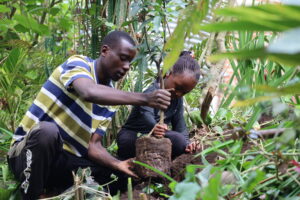
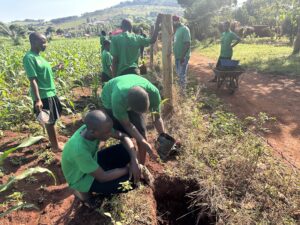
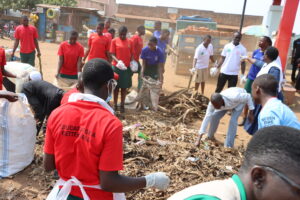
Through our Laudato Si’ Clubs – LSiCs (faith-inspired environmental clubs), community engagement activities, tree-planting programes, green-zone creation in families, institutions and communities, promotion of sustainable climate-smart agriculture, peer climate education programes, innovations through Laudato Si’ Green Festivals, and youth mentorship, young people in Uganda are becoming active contributors to environmental transformation.
The Laudato Youth Initiative seeks to bridge the gap between environmental awareness and practical implementation by connecting faith, science, indigenous knowledge and youth leadership.
This is particularly important for us in Uganda, where young people make up a significant share of the population and where climate resilience is closely connected to agriculture, livelihoods, biodiversity and natural resource protection as sources of life and as a means of survival through ecotourism. Uganda’s agricultural dependence on climate-sensitive production systems makes adaptation particularly important for rural livelihoods, food security and economic resilience (FAO, n.d.; World Bank, 2021).
We need a generation that understands environmental laws, appreciates scientific evidence, recognizes indigenous conservation practices and possesses the practical skills to implement solutions. Such wisdom is richly available in our cultural institutions, and when young people are mentored to value their cultural and religious conservation practices, we will go a long way towards loving our motherland and protecting it.
We believe no one will come from abroad to protect our motherland, and so we must be the first responders.
Young people must not only inherit the consequences of today’s climate decisions; they must be equipped to shape and implement the solutions. This is consistent with the wider international commitment to inclusive participation and the role of young people in achieving sustainable development (United Nations, 2015).
3. Uganda’s Cultural Conservation Practices: The Environmental Wisdom We Must Not Lose
As we reflect on COP31, Africa must also recognize that some of its most important environmental solutions are embedded in its cultural heritage. Uganda provides valuable examples of how cultural institutions and traditional knowledge systems have historically contributed to environmental conservation.
For the Catholic Church in Uganda, for example, the Uganda Martyrs are revered for their ecological footprint, and we at the Laudato Youth Initiative have taken on the patronage of St. Adolf.
What makes St. Adolf Ludigo particularly inspiring for us is how his life reflected the values of integral ecology, a concept emphasized in Pope Francis’ encyclical Laudato Si’, which recognizes the interconnectedness of humanity, nature and spiritual life (Francis, 2015, paras. 137–162).
Rooted in his culture, tied to the land and its rhythms, Ludigo embodied this wholeness. His humility and resilience echoed humility in a heroic manner to protect his faith and dignity of farmers and herdsmen, those who depend on the earth and care for it, often with little recognition and amidst great challenges.

In Buganda, for example, clan totems and associated cultural taboos have helped establish relationships between communities and particular animal and plant species. These traditions have, in certain contexts, discouraged the killing or destruction of species associated with particular clans, and so did the Uganda Martyrs.
Research conducted on selected clans in the Buganda Kingdom has examined how totemic practices contribute to wildlife conservation and habitat protection, highlighting the potential for integrating cultural conservation values with contemporary wildlife management (Muyiira et al., 2025). Across different Ugandan communities, sacred forests, sacred trees, traditional ecological knowledge and customary restrictions have also helped protect biodiversity and natural spaces.
For example, the Batwa people’s relationship with forests demonstrates how indigenous knowledge and cultural identity are strongly connected to natural ecosystems. However, the history of conservation and protected areas in Uganda also raises important questions about indigenous land rights, participation and the recognition of community interests (Paterson, 2022).
Traditional practices relating to medicinal plants, sustainable harvesting, water sources and sacred sites also offer valuable lessons for contemporary conservation. These practices should not simply be celebrated as cultural heritage. They should be recognized as potential resources for modern environmental governance.
International biodiversity frameworks recognize the importance of traditional knowledge, innovations and practices of indigenous and local communities in biodiversity conservation (United Nations, 1992, Article 8(j)). Similarly, the UNESCO Convention for the Safeguarding of the Intangible Cultural Heritage recognizes the importance of protecting cultural practices, knowledge and expressions passed between generations (UNESCO, 2003).
Why should our environmental policies operate independently of the cultural institutions that already influence how communities relate to land, forests, animals and water? Our cultural and religious institutions must become active partners in conservation. Religious, traditional, clan leaders, cultural custodians and community elders can help mentor young people to strengthen environmental awareness, institutions help guide students on how to translate eco values into future careers to help protect culturally significant ecosystems and encourage sustainable natural resource management but also improve their economic independence and the livelihoods of people.
We also see how much of our traditional artefacts and crafts can promote economic independence among local communities and how young people can gain trade and social skills through these activities.
Government environmental agencies, research institutions and cultural institutions must work together to identify which traditional practices can be strengthened, documented and integrated into contemporary conservation frameworks. The opportunity is to build a conservation model that respects both scientific evidence and indigenous knowledge.
We should not have to abandon our faith and cultural identity to embrace environmental sustainability. Our cultural heritage and faith can be one of the foundations upon which we build it. So that all can say My Environment My Responsibility.
4. Making Environmental Laws Work Through Our Institutions
It is high time that our national environmental laws and cultural sustainability practices began working together more effectively. Environmental protection cannot be left to government agencies alone. The Ugandan National Climate Change Act, 2021, provides a legislative framework for coordinating climate action and strengthening institutional responses to climate change (Republic of Uganda, 2021).
Cultural institutions have community legitimacy and historical knowledge. Faith institutions have extensive networks through schools, parishes, dioceses, congregations and community organizations. Universities provide research and technical expertise. Youth organizations mobilize emerging leaders, as we do with our Laudato Si’ Clubs.
Government agencies should enforce policies with practical support mechanisms, regulate activities and enforce equitable environmental standards. Each institution must have a defined responsibility, followed by measurable implementation requirements and accountability mechanisms. Each institution brings a unique role and perspective to the table.
In our Motherland Uganda, stronger collaboration among cultural institutions, faith groups, government agencies, civil society and educational institutions could help turn environmental legislation from written policy into everyday community practice. That is what the Laudato Youth Initiative stands for as its message to its motherland.
For example:
1. Cultural institutions can promote biodiversity protection through traditional conservation values and customary practices.
2. Faith institutions can integrate ecological responsibility an action, enhance environmental education, model real action on their lands and foster community development through its faithful.
3. Government agencies can support enforcement, environmental monitoring, regulation and technical assistance.
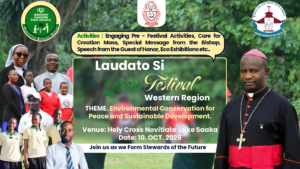
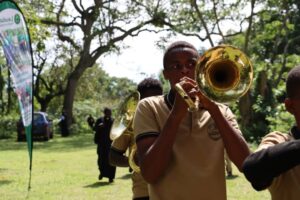
4. Youth organizations can lead community environmental action, awareness campaigns and practical activities. Every year, the Laudato Youth Initiative runs a Laudato Si’ Green Festival focused on engaging communities, enhancing climate education and blending faith and environmental protection through a faith-inspired environmental festival that promotes creative innovations and environmental sustainability exhibitions. The fruits are far-reaching.
5. Universities can document indigenous knowledge and develop evidence-based conservation solutions.
This kind of institutional collaboration can make environmental sustainability a permanent part of our national development agenda. It also reflects the Sustainable Development Goals, particularly SDG 13 (Climate Action), SDG 15 (Life on Land) and SDG 17 (Partnerships for the Goals), which emphasize climate action, ecosystem protection and institutional partnerships (United Nations, 2015).
5. Africa Must Mobilize Its Own Climate Implementation Front
COP31 has once again demonstrated the challenges of relying exclusively on international negotiations to deliver the resources and decisions required for climate action. Africa must accelerate domestic and regional multilateral cooperation. We must mobilize our own institutional capacities, strengthen regional partnerships, invest in renewable energy and develop climate solutions that respond to our economic and environmental realities.
We must power our own clean energy transition.
This means investing in decentralized renewable energy, regional electricity integration, sustainable agriculture, climate-resilient infrastructure, ecosystem restoration and accessible financing for community-based adaptation.
Uganda’s Energy Transition Plan provides an example of the importance of pursuing universal energy access, modernizing the energy system and ensuring that the transition contributes to economic development and energy security (IEA, 2023).
It also means strengthening our continental negotiating position. Africa must build an unshakeable front that demands climate finance that is adequate, accessible, predictable and enforceable.
We cannot continue to have ambitious climate commitments without corresponding resources for implementation. The conversation must move from financial announcements to actual disbursement, from promises to measurable investments and from rhetoric to accountability.
The Paris Agreement recognizes the responsibility of developed countries to provide financial resources to assist developing countries with mitigation and adaptation, while also encouraging the mobilization of climate finance from various sources (UNFCCC, 2015, Article 9).
Our governments must also strengthen domestic financing mechanisms and ensure that local communities, young environmental leaders and conservation institutions can access resources to implement practical solutions.
Climate justice must be visible in the lives of the people who are most affected. During Cop 29 we polished an article saying
The international response to the climate crisis needs to bridge the gap between Cop summits and the experience of those who face its consequences. It must ignite hope for a climate-resilient generation
6. The Shift Beyond COP31: What Should Change Now?
The experience of COP31 should challenge us to reconsider how we organize climate action. We need to move:
1. From international negotiations alone to strong domestic and regional implementation.
2. From discussing communities to giving communities equitable representation.
3. From environmental awareness to practical ecological responsibility.
4. From treating young people as participants to preparing them as environmental experts and implementers.
5. From viewing cultural heritage only as identity to recognizing its contribution to biodiversity conservation.
6. From isolated institutional programmes to coordinated national environmental action.
7. From climate finance rhetoric to resources that reach communities and produce measurable outcomes.
These are not alternatives to the COP process. They are necessary foundations for making international climate commitments practical and actionable. They also reinforce the central objectives of the Paris Agreement and the 2030 Agenda for Sustainable Development: translating international commitments into measurable national action, strengthening partnerships and ensuring that development is inclusive and sustainable (UNFCCC, 2015; United Nations, 2015).
In Summary our Laudato Si Voices on Cop 31 is saying : The Real COP Begins When Delegates Return Home
The failure to achieve consensus on an overarching political agreement at COP31 should not become an excuse for inaction. It should challenge us to strengthen the systems through which climate action is delivered. When Pope Francis wrote Laudato Si’, he called for a change in how we relate to our common home. He challenged governments, institutions, communities and individuals of goodwill to embrace ecological responsibility and unite the human family for climate action that will quicken ecological transformation. Its no surprise the Laudato youth Initiative Motto is “United for Climate Action.
Pope Francis’ call for integral ecology emphasizes that environmental, social, economic and cultural concerns are interconnected and must be addressed together (Francis, 2015, paras. 137–162). At the Laudato Youth Initiative, we see this transformation through the formation of young environmental leaders, the integration of faith and environmental responsibility, and the promotion of practical community- and individual-based action by Laudato Youth In Laudato Si Clubs.
Uganda’s cultural conservation traditions remind us that environmental responsibility is not entirely new to our societies. We have inherited knowledge, values and institutions that can contribute to the solutions we urgently need. Recognizing traditional knowledge and community participation is consistent with international biodiversity conservation principles and the safeguarding of cultural heritage (United Nations, 1992; UNESCO, 2003).
Our task is to strengthen these foundations, connect them to modern environmental governance, and mobilize the institutions that can turn knowledge into action, allowing us to be part of the renewed ecological transformation at the individual, family, institutional, governmental and continental levels.
The COP process must continue to unite countries. But our domestic and regional institutions must become stronger vehicles for implementation. We must build environmental governance systems that listen to communities, empower young people, recognize cultural institutions, enforce environmental laws and mobilize resources for practical solutions.
The next chapter of climate action must be written not only in international conference halls but also in our homes, villages, schools, churches, cultural institutions, universities and government offices.
For us, COP31 is over, but the real work begins at home.
The most important outcome must be the shift we make: from promises to implementation, from negotiations to community action, and from environmental concern to ecological conversion. Ultimately, it is not only what we gained at COP31 that matters. It is what we are prepared to change because of it. The takeaway from the Laudato Youth Initiative Voices is:
“The real COP begins when we return home.”
This is the central philosophy of young Laudato Si’ Voices. Let’s roll up our sleeves to build our motherland and the future of our nation. What we are saying is In paragraph 13, of Pope Francis encyclical Laudato Si which says:
“Young people demand change. They wonder how anyone can claim to be building a better future without thinking of the environmental crisis and the sufferings of the excluded.”
More than a decade later, this message remains visionary and a compass for good decision-making
1. From global negotiations to domestic implementation
2. A reflection on our work at Laudato Youth Initiative always has that in mind by preparing young people to become first responders and future implementers. One of the most important lessons of Laudato Si’ is that ecological conversion requires formation.
3. Uganda’s cultural conservation practices: The environmental wisdom we must not lose
4. Making environmental laws work through our institutions
5. Africa must mobilize its own climate implementation front
6. The shift beyond COP31: What should change now?
For us, COP31 is over, but the real work begins at home.
References
Food and Agriculture Organization of the United Nations. (n.d.). Uganda: Scaling up climate ambition on land use and agriculture through nationally determined contributions and national adaptation plans (SCALA). https://www.fao.org/in-action/scala/countries/uganda/en
Francis. (2015). Laudato si’: On care for our common home. The Holy See. https://www.vatican.va/content/francesco/en/encyclicals/documents/papa-francesco_20150524_enciclica-laudato-si.html
International Energy Agency. (2023). Uganda energy transition plan. https://www.iea.org/reports/uganda-energy-transition-plan
International Institute for Sustainable Development. (2026, November 22). Highlights and images for 22 November 2026. Earth Negotiations Bulletin. https://enb.iisd.org/antalya-un-climate-change-conference-cop31-22Nov2026
Muyiira, J., Ssekamwa, J. C., & Barakagira, A. (2025). Totems practices and wildlife conservation in Uganda: A case of selected clans in the Buganda Kingdom. Journal of Global Ecology and Environment, 21(3), 159–175. https://doi.org/10.56557/jogee/2025/v21i39463
Paterson, A. (2022). Protected areas, community rights and affirmative action: The plight of Uganda’s Batwa people. African Human Rights Law Journal, 22(1), 289–316. https://doi.org/10.17159/1996-2096/2022/v22n1a12
Pontifical Council for Justice and Peace. (2004). Compendium of the social doctrine of the Church. Libreria Editrice Vaticana. https://www.vatican.va/roman_curia/pontifical_councils/justpeace/documents/rc_pc_justpeace_doc_20060526_compendio-dott-soc_en.html
Republic of Uganda. (2021). National Climate Change Act, 2021. Ministry of Water and Environment. https://www.mwe.go.ug/public/publications/laws_policies/national-climate-change-act-2021
United Nations. (1992). Convention on biological diversity. https://www.cbd.int/convention/text/
United Nations. (2015). Transforming our world: The 2030 Agenda for Sustainable Development. https://sdgs.un.org/2030agenda
United Nations Educational, Scientific and Cultural Organization. (2003). Convention for the safeguarding of the intangible cultural heritage. https://ich.unesco.org/en/convention
United Nations Framework Convention on Climate Change. (2015). The Paris Agreement. https://unfccc.int/process-and-meetings/the-paris-agreement
United Nations Framework Convention on Climate Change. (2026, November 22). UN Climate Change Executive Secretary Simon Stiell remarks at the closing plenary of COP31. https://unfccc.int/news/un-climate-change-executive-secretary-simon-stiell-remarks-at-the-closing-plenary-of-cop31
World Bank. (2021). Climate risk country profile: Uganda. https://climateknowledgeportal.worldbank.org/sites/default/files/2021-05/15464-WB_Uganda%20Country%20Profile-WEB%20%281%29.pdf