Laudato Si Voices | throwaway culture | 04/11/2026
In _Laudato Si’_, Pope Francis gives a name to the sickness of our time, and he calls it the “throwaway culture.” It is a culture that has forgotten how to keep, how to repair, how to cherish, a culture that buys, uses, and discards, that is quick to throw away what is no longer new, no longer fashionable, no longer useful.
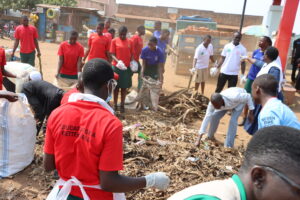
We buy a phone today, and tomorrow a new model appears, and the old one still working perfectly becomes rubbish. We buy water in a plastic bottle, drink for five minutes, and throw the bottle away to live for five hundred years in the soil. We cook food in plenty, eat half, and throw the rest, while a neighbour goes to sleep hungry. In our markets, in every trading centre, polythene bags fly in the wind, clog the trenches, and kill the soil. We have become experts in producing waste, and the earth, our common home, has slowly become a dustbin.
Pope Francis warns us that the throwaway culture does not stop with things, for when we learn to throw away objects so easily, we soon learn to throw away people. This is the most painful truth of _Laudato Si’_: a society that discards food will soon discard the hungry, a society that discards clothes will soon discard the naked, and a society that discards old phones will soon discard old people. Think of the unborn child, discarded because he was not planned, because she would be a burden. Think of the elderly grandmother in the village, left alone in a leaking hut because she is no longer productive, because she is “too slow.” Think of the poor man at the gate, the street child in town, the person living with disability, the prisoner, the refugee all treated as if they are surplus, as if they are waste to be removed so that the rest of us can live comfortably.
This is our most wrong logic of throwaway culture: what is useful, I keep; what is not useful, I throw. Yet this is not the logic of God, and it is not the logic of _Laudato Si’_, for in the eyes of God, nothing is waste and God does not throw away. The old mango tree that no longer gives fruit still gives shade. The old grandmother who can no longer dig still gives wisdom, prayer, and blessing. The child in the womb, the child on the street, the poor man with torn clothes each one is a masterpiece, created in the image of God.
_Laudato Si’_ teaches us integral ecology, that everything is connected, and that we cannot love the earth and hate the poor, we cannot protect the forest and abandon the child, we cannot cry over plastic in the lake and remain silent when a human life is discarded. To care for our common home means to care for every life in it.
What then must we do? First, we must learn to keep again keep the bottle, wash it, reuse it, repair the shoe instead of throwing it, cook only what we need, and let nothing good go to waste. Second, we must learn to see again see the elderly not as a burden, but as a library, see the poor not as a problem, but as a brother, see the unborn not as a mistake, but as a gift. A mother in Kyaka who shares her cassava, a student who sits with a lonely old man, a Christian who visits a prisoner these are the true revolutionaries against throwaway culture.
In the end, _Laudato Si’_ asks us a simple but piercing question: will we be a people who throw away, or a people who welcome? Will we be a people who discard, or a people who cherish? The earth is groaning under our waste, and the poor are crying under our indifference, but it is not too late. Let us build a culture of life, a culture of care, a culture where nothing and no one is thrown away, for in God’s house, there is no dustbin for human beings.
Article was written by
Sem. Robert Bigabwarugaba
St. Paul’s National Seminary – Kinyamasika