Laudato Voices| 29 August, 2026 | Nine Days of Mourning of the Omukama King Oyo Nyimba Kabamba Iguru Rukidi IV
Nine Days of Mourning
We want to be part of the mourning and legacy
“No child should be born with HIV in Tooro and people that are tested and found to be HIV-positive should be placed on treatment.”
His Conservation Legacy traced from a number of Initiatives
One Million Trees to be planted in honor of King Oyo’s Climate Conservation legacy
The announcement of plans to plant one million trees in honor of the late King Omukama Oyo Nyimba Kabamba Iguru Rukidi IV, as part of the nine days of mourning, is both a tribute and an eye-opener for Tooro and her people. It marks the beginning of a bold journey to build a modern legacy and a sustainable future, grounded in integral ecology—a vision King Oyo championed as a youth and cultural leader who blended cultures and faiths, and pronounced God as the compass for his monarchical rule. He was a king of kings, worthy of reverence and respect. This initiative affirms our work as a faith-based environmental organization inspired by Laudato Si’, Pope Francis’s 2015 encyclical letter focused on environmental protection, human dignity, and the urgent moral call to care for our common home, exploring the interconnection between people and creation.
There is no better way to keep his vision alive than by upholding his legacy: recognizing the threat of environmental degradation to the Kingdom of Tooro and the area surrounding the Mountains of the Moon. His Majesty Oyo Nyimba Kabamba Iguru IV led high-profile conservation drives in the region, leaving behind a lasting green-action legacy. Now that “Mata Gatikire, Omukama Atuulize,” it is upon us to boldly continue legacy programs that will keep his memory alive. The one million trees initiative is one that the people of Tooro must uphold: planting trees and naming them after him. In a few years, we will see him give back life through the fruit and indigenous trees planted in memory of our revered King of Tooro Kingdom and role model to many young people. A day after his death, we published a tribute article appealing for recognition of his special efforts and legacy in protecting the environment, highlighting his legendary work in turning this dream into reality. Read our full article
Tooro People to Plant 1 Million Trees in Memory of King Oyo – Margaret Muhanga
“The first light of the morning sun reveals this landscape before us, letting me encounter a true giant, indeed, encountering a true giant lamenting the loss of its glaciers, allowing me to stand aloft and see its truths in plain sight before I face the last challenge of my journey. Protect our rivers and other natural resources around us.” he said
Like in “The Letter”, it told us what is happening at the frontline of environmental destruction. King Oyo’s story showed us the beauty of our land, a treasure that we must all protect before it’s lost forever.” He saw the waters of the Margherita Glacier and how they are vital to the survival of the biodiverse Rwenzori Mountains ecosystem and the communities who live downstream. These waters provide the highest source for the Nile River, by extension, the rest of the world. If the Margherita Glacier continues melting at its current rate, it is expected to disappear by 2050, he noted.
A recent example is the Nepal crisis we are all following in the news; it has become a hotspot for climate disasters as the planet heats up. Vast swaths of ice up in the Himalayas are melting, and rocky mountainsides are becoming less solid and more fluid, as reported by CNN as they asnwer the lingering question What caused the Nepal Flood Wave?
The Symbolic and cultural significance of planting trees as a way to mourn by giving new life through nature
A tree is a particularly powerful symbol of remembrance. Unlike temporary memorials, trees grow, provide shade, support biodiversity, protect soil, and benefit generations who may not have lived during the person’s lifetime. We see this as a life-giving initiative that the people of Tooro should embrace, as the proposed one-million-tree campaign could serve as a lasting tribute to King Oyo. King Oyo frequently called for the restoration of wildlife corridors that once connected protected areas. As we have read above King Oyo made history in August 2022, by undertaking a challenging 10-day Rwenzori Royal Expedition to the summit of Margherita Peak (5,109 meters above sea level) on Mount Stanley, promoting eco-tourism and encouraging both local and international visitors to experience Uganda’s unique natural heritage.
The expedition highlighted the need to Conserve Mountain Ecosystems to slow down the rapid melting of the ranges, equatorial glaciers and the severe flooding affecting downstream communities. King Oyo consistently used his cultural authority to unite people for the restoration of critical biodiversity corridors linking protected areas, emphasizing the interconnection of habitants talked about in Laudato Si showing how habitats are essential for wildlife movement, ecological resilience, and sustainable livelihoods.
A look at Laudato si’, Pope Francis’ radical encyclical on care for the environment, which has been praised as “the most important piece of intellectual criticism in our time”. Published in 2015, this encyclical letter was the first ever written by a Pope on the subject of the environment, and it went on to make waves both inside and outside the Church. UN Secretary-General Ban Ki-moon praised the document for its “moral voice,” while the Indian novelist Pankaj Mishra called it “arguably the most important piece of intellectual criticism in our time.” Laudato si’ also had an impact on policy.
The encyclical is often credited with helping to build consensus in the run-up to the 2015 UN Climate Change Conference in Paris, at which 196 countries signed a treaty pledging to keep global warming to below 2°C. The Pope writes, for instance, that “The universe unfolds in God, who fills it completely. Hence, there is a mystical meaning to be found in a leaf, in a mountain trail, in a dewdrop, in a poor person’s face. Standing awestruck before a mountain, we cannot separate this experience from God” (233). What we need, he says, is “a new way of thinking about human beings, life, society and our relationship with nature” (178).
The case for ‘integral’ development
Central to Laudato si’ is the idea of ‘integral ecology’—the notion that the climate crisis is intrinsically linked to our present day social, political, and economic problems, and cannot be addressed in isolation from them.
“We are faced not with two separate crises, one environmental and the other social,” the Pope writes, “but rather with one complex crisis which is both social and environmental.”
Thus, he says, we need “an integrated approach to combating poverty”, one which “protects nature” while at the same time “restoring dignity to the excluded” (139).
This leads Pope Francis to argue for “integral human development,” or development which does not prioritise economic growth and technological progress above all else. While growth is important, the Pope says, we must ensure that it is promoted in tandem with other things of value, including the natural world, human culture, the poor and vulnerable, and animal life.
Laudato si’ in practice
One of the major consequences of Laudato si’ was a significant increase in Catholic environmental activism. I believe the Legacy of King Oyo can increase cultural leaders impact and voice on environmental activism because King Oyo emphasized behavioral change and filling the Knowledge gap because he emphasized the promotion of local tourism saying most Ugandans encroach on wildlife habitants and corridors because of limited knowledge on conservation and its importance.
“If we promote local tourism where Ugandans are able to to explore what is in their backyard, we shall have helped to cure that spirit of Ignorance’
A Legacy Connected to Life and Environmental Conservation
“We need to plant trees and stop encroaching on wetlands and forests in order to conserve the environment. By doing this we will combat drought that has been affecting us following massive destruction of wetlands and forests in the Kingdom and the country at large,”
The Laudato Youth Proposal
What we are going to do
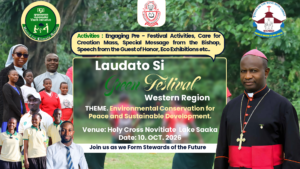
During our upcoming Laudato Si Green Festival Program on Oct 10th in Fort Portal, we hope to align the Baragirakiki program with our Pre-event activities, which will include a community cleanup and encourage the people of Tooro to eliminate single-use plastics from their families, functions, gatherings, and public events. As a step forward in the region’s environmental conservation drive and helps build a lasting legacy for a king who envisioned an eco-tourism city. In a symbolic and practical gesture, the people of Tooro would be encouraged to use traditional family water pots to preserve their culture and reduce excessive use of hard plastics; organizations can adopt dispensers; and individuals, schools, universities, and youth should use reusable bottles for their individual use and at all future gatherings. Using a plastic bottle to honor King Oyo with the Laudato Youth Initiative decision of embracing both a moral and ecological action imperative.
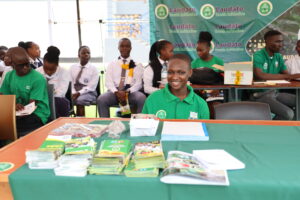
During the Laudato Si Green Festival, we will reflect on the encyclical’s central message: that “everything is connected” and individual actions matter in healing the planet. For the Laudato Youth in the Tooro Region this year, our festival will lead us to pray for our late king and emulate his example by planting trees with a plan for their growth, showcasing creative eco-innovations for sustainability, and launching a youth-led media campaign. This campaign will be supported by our existing Laudato Si Clubs across Tooro, which we can mobilize to call others in Tooro to join.
Empowered to take a leadership role
We will explore a creative idea to mobilize cooperative companies in Fort Portal to help us build green eco spaces and bus stops for student bus pickups to different schools, creating a safe environment for children and youth while also promoting a clean environment! These stops can serve as education centers with visuals and information that promote care for the environment, as desired by our fallen king. Join us with ideas, or reach out to the Laudato Youth Initiative as we champion this joint initiative to create a lasting symbol of our commitment to a greener Tooro and youth engagement, as our fallen king desired.
Last but not least, think of how we can empower youth to build a sustainable future!
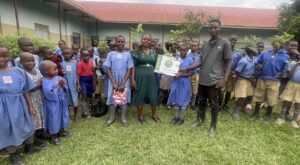
For the initiative to have a lasting impact, communities would need to select appropriate tree species, identify suitable planting areas, protect young seedlings, and establish systems to monitor and maintain them. Schools, cultural institutions, farmers, youth organizations, local governments, religious institutions and civil society groups could all play a role. We want to champion this; you can join us if you are a well-wisher who wants to think with us as we plan to promote the ecological legacy of King Oyo and enhance the impact of Laudato Si Clubs in the region that now mobilizes youth in different schools to unite for climate action.
Turning Mourning Into Action to create a lasting impact and a lasting memory.
The proposed tree-planting campaign could bring a new dimension to the nine-day mourning period by transforming grief into collective action. We are confident that the people of Tooro will use this initiative to establish a network of community forests, school trees, agroforestry projects, and restored landscapes dedicated to the memory of King Oyo. Each participating community could plant trees in locations meaningful to its people. Schools could encourage students to plant and care for trees. Farmers should be encouraged to integrate suitable trees into their agricultural systems, while local governments could identify degraded public spaces for restoration. In this way, the campaign could become more than a one-time mourning activity and evolve into a long-term environmental program that upholds King Oyo’s name and values. Especially as it can be used to activate his 10 million trees campaign where the king aimed at combating drought that has been affecting the Kingdom following massive destruction of wetlands teaching the people of Tooro that work is a divine gift from God, and we should use our creativity to care for His creation and add value to our common home. Chimp Reported him saying
“I encourage all people of Tooro and Uganda at large to join in the tree planting campaign so that we can save the environment as well as conserve it”.
A Living Memorial for Future Generations
About King Oyo, A King Who Grew With His People
King Oyo’s story was remarkable from the outset. He ascended the throne at age three, becoming one of the world’s youngest and most renowned monarchs. His enthronement as a child attracted international attention, and his coming of age was closely observed both within Uganda and internationally (Muhumuza, 2026).
Upon assuming full responsibility at age 18, King Oyo entered a new chapter of his reign. Over the years, he emerged as a prominent cultural figure in Uganda and an enduring symbol of Tooro identity (Smith, 2024). Uganda’s traditional monarchies do not wield political authority like sovereign monarchies. Rather, their influence is predominantly cultural and social. Nonetheless, traditional leaders remain vital custodians of history, culture, and community identity (Okello, 2025; Muhumuza, 2026). King Oyo’s passing, therefore, signifies not only the loss of an individual but also a pivotal moment in the ongoing history of the Tooro Kingdom (Kagaba & Nsubuga, 2026).
References
Ashaba, A. (2026, August 28). Inside Museveni and King Oyo’s three decades of a royal-state relationship. Daily Monitor.
Kagaba, J., & Nsubuga, E. (2026). The Legacy of King Oyo: Leadership and Culture in Tooro. Kampala: Uganda Heritage Press.
Muhumuza, D. (2026). Monarchies in Modern Uganda. Makerere University Press.
Muhumuza, R. (2026, August 28). Oyo Nyimba, Ugandan ‘boy king’ who mesmerized world leaders, dies at 34. Associated Press.
Okello, P. (2025). Tradition and Identity in Uganda’s Kingdoms. Journal of African Studies, 42(3), 201–219.
Smith, L. (2024). Young Monarchs: Leadership and Identity. African Royalty Review, 15(2), 45–56.
Tooro Kingdom. (2026, August 28). Official announcement on the passing of His Majesty the Omukama of Tooro.
Waswa, S. (2026, August 28). King Oyo succession: Chief Prince summons emergency meeting at Karuziika Palace. Pulse Uganda.