Saaka, a picturesque village nestled in Fort Portal City, Western Uganda, is home to over 60,000 residents. This idyllic village has played a significant role in shaping my deep-rooted commitment to environmental conservation. The nature of my village has taught me the importance of nurturing plants, caring for people. I have grown up exploring Saaka’s enchanting surroundings while tending goats, walking to school, or attending church on Sundays, and I have now developed a deep appreciation for the wonders of nature around me.
My childhood memories in Saaka are filled with the village’s breathtaking beauty. Visiting the hilly countryside has offered awe-inspiring views of majestic hills, rock formations, and the stunning Great Rift Valley.
When you visit Saaka, you will be struck by its unparalleled beauty. The village boasts spectacular views of the Rwenzori Mountain Ranges, encompassing over 52 crater lakes and more than 10 rivers in Fort Portal. Despite my travels to various parts of the world, Saaka remains a place of unmatched beauty that has rekindled my admiration for my hometown, Fort Portal, and Saaka in particular.
Situated within the greater Kabarole District and Fort Portal City, Saaka is surrounded by awe-inspiring geographical features such as crater lakes, Mabere Caves, Hakigere, the icon of the Bachwezi dynasty, Saaka airstrip, and panoramic views of the Rwenzori Mountain Ranges and the Great Rift Valley. Landmarks like the Mountains of the Moon University and Holy Cross Novitiate Lake Saaka add to the village’s charm, with Lake Saaka itself formed through natural processes.
A leisurely walk through Saaka offers an unforgettable experience, starting with a scenic ride along Saaka Road, lined with charming houses built from volcanic rock. The historical significance of Saaka Road, once known as Duke of Abrizzi Road, adds to its allure. A short ride leads to the breathtaking beauty of Saaka, followed by an hour’s walk to the base of the hills.
As you traverse the village, you’ll encounter the secure and peaceful nature of Saaka, at Holy Cross Noviate, Saaka Airstrip, Mountains of the Moon University and with neigbours like Katoojo prison and Muhooti Barracks.
Exploring further, you’ll discover pockets of lush vegetation within the crater, with some areas owned by Mountains of the Moon University. Ascending two volcanic hills unveils mesmerizing vistas of small lakes, with Lake Saaka standing out prominently. The highest peak offers the best vantage point to marvel at the grandeur of the Rwenzori Ranges.
Saaka Fort Portal’s exceptional climate comes from several factors, including its higher elevation, favorable location near the Rwenzori Mountains, distinct rainfall patterns, abundant vegetation and forest cover, and proximity to the equator. Together, these elements create a pleasant, inviting climate conducive to various activities and agricultural productivity. You will miss seeing someone ride Matoke to downtown Fort Portal for Sale.
Saaka’s wonders extend beyond its natural beauty to encompass cultural, educational, and spiritual richness. The Holy Cross Novitiate residence serves as a haven for religious individuals dedicated to serving communities across East Africa and beyond. Reaching the hilltops rewards you with sweeping panoramic views of Fort Portal’s surroundings, including iconic landmarks like Our Lady of Snows Virika Cathedral, Karuzika (Tooro Kingdom Palace), and St. John’s Cathedral.
Noteworthy is Nyakasura School, an esteemed institution established in 1926 by a Scotsman known as ‘the Commander’. It quickly became popular due to its Scottish-style uniform for boys, which some people misinterpret as skirts.
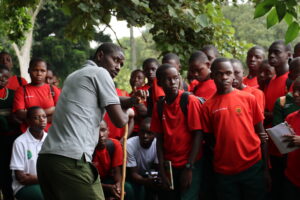
The school values not only academics but also faith, a strong education, and active involvement in caring for the environment, which defines its distinctive beauty. Its students actively engage in Laudato Club activities, fostering a deep appreciation for nature through educational field trips, tree-planting initiatives, plastic recycling, and modern farming techniques. This commitment to environmental stewardship empowers students to become proactive agents of climate change resilience.
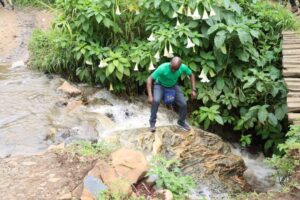
Next to Nyakasura are the Mabere Caves; rock formations believed to be as a result of stalagmites and stalactites, while visitors enjoy the intriguing cultural tales associated with the caves. Nestled amidst lush trees and cascading waterfalls, these caves hold a rich cultural history.
We (the Batoro people) believe and share captivating myths about these caves, named after King Bukuku’s daughter, Nyinamwiru. Known as “Amabere Ga Nyinamwiru,” or “Breasts of Nyinamwiru,” the caves honor the ancient Batembuzi Dynasty. As a visitor, you can also hike to Nyakasura Hill from this site, which offers panoramic views of three crater lakes, including Lake Saaka and the mysterious marking of a giant’s foot, believed to belong to a member of the Batembuzi dynasty.
In 2022, Nsita Monica Akiiki published a book “The 40 Amazing Crater Lakes You Must Visit in Tooro Before You Die,” a narrative and pictorial celebration of the most magnificent lakes found in the picturesque region of Tooro Bukuku and Saaka Area, shortly after she published this beautiful book that I learned of through Amazon. In it, you will experience and celebrate the breathtaking lakes of the picturesque Tooro region, including Lake Saaka. This narrative and pictorial tribute showcases the region’s magnificent lakes, their indigenous names, and key descriptors, offering a glimpse of the area’s natural wonders. I highly recommend that you look out for it.
In addition to visiting Saaka, you may also visit Semuliki National Park, where you can make a pit stop for birdwatching or to see the hot springs. Alternatively, you can head to Kibale National Park for chimpanzee trekking or to Queen Elizabeth National Park for a wildlife safari and a boat excursion, both surrounding Saaka, the pearl of Fort Portal.
Saaka, my home, remains a village of wonder that inspires my commitment to caring for Mother Earth and embodies the intrinsic beauty and environmental harmony that define the heart of Uganda’s natural splendor. It is a place where the magic of nature intertwines with the cultural tapestry, creating a sanctuary of awe-inspiring beauty and ecological consciousness that helped me easily contextualize the message of Laudato Si that I share with young people in the Laudato Youth Initiative having been a club leader at MMU.
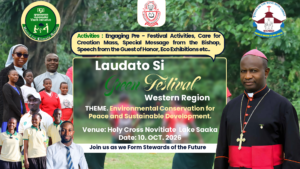
If you want to explore more join us on 1oth Oct 2026, at Saaka Novitaiate for the Laudato Si Green Festival where Integral Ecology will be brought to life.
Ayebale Fred
Laudato Si Club MMU