


Laudato Voices |17 September, 2026 | El Niño
A few days into Uganda’s rainy season and the start of the new academic term, the increasing threat of heavy rainfall and flooding deserves serious attention. Uganda’s Ministry of Water and Environment forecasts near-normal to above-normal rainfall across most parts of the country during the September–December 2026 season. The forecast also indicates that an established El Niño episode is expected to intensify during the season, increasing the likelihood of heavier rainfall, particularly in Central, Northern, and Eastern Uganda. Kampala and other towns are among the areas identified as potentially vulnerable to flooding from heavy downpours (Ministry of Water and Environment [MWE], 2026).
This situation should not be treated only as a concern for meteorologists, city authorities, and emergency agencies. It is time for our schools to engage with students on serious questions about the causes, effects, and solutions to flooding in Ugandan cities and communities. Schools are not only places where students learn theories and facts; they are places where young people can understand problems affecting their communities and develop ideas for a safer and more sustainable future. Laudato Si Clubs are such platforms where young people reflect on LS 1 (What is happening to our Common home)
In chapter one, Pope Francis speaks of the earth as “our home,” and like any home, we want to take care of it! Yet, in recent years, the Pope says we have not done enough to be good stewards.
A common problem he cites is what he calls a “rapidification” of society. In other words, human activity has accelerated, with a faster pace of life and work, which contrasts with the slower pace of nature and change. This rapid pace has led us to overlook common environmental problems and social concerns that are slowly but surely looming over our common home.
He cites several key problems, including pollution and climate change, water issues, the loss of biodiversity, the decline in the quality of human life, and the breakdown of society, which, in turn, receive a weak human response.
Recent reports show why the issue is urgent
Kampala provides concrete evidence of the seriousness of urban flooding. The Kampala Capital City Authority (KCCA) reported in August 2026 that it had identified 69 critical flood blackspots across the city. The authority also reported that Kampala has approximately 212 kilometers of primary and secondary drainage infrastructure and was maintaining and monitoring drainage channels in preparation for the anticipated rains (Kampala Capital City Authority [KCCA], 2026).
The problem is not simply the amount of rain received. KCCA has warned that waste dumped in drainage channels can block stormwater flow and worsen flooding. This demonstrates the relationship between human behavior, waste management, and environmental problems in cities (KCCA, 2026).
The national seasonal climate outlook also identifies heavy downpours, flash floods, and urban flooding among the potential negative impacts of the 2026 rainy season. It specifically identifies the Kampala metropolitan area and other towns as places where flooding may occur during heavy rainfall (MWE, 2026).
These examples give educators and community leaders something concrete to take into the classrooms and community meetings. The new Uganda curriculum fits well in fostering behavior change and practical response. Instead of asking students to memorize a definition of flooding, educators can now design practical projects that help students understand: Why does water accumulate in particular areas? Where does the water come from? Why do drainage systems become overwhelmed? What happens to families, businesses, roads, and schools when an El Niño warning is not taken seriously? What could communities and authorities do differently? Creative discernment is needed to understand what is happening in our communities and cities. For instance, we already have facts and evidence about what is happening to our cities.
What causes floods in Ugandan cities?
Learners should understand that floods are rarely caused by rainfall alone. Heavy rainfall is an important trigger, but the severity of urban flooding also depends on drainage capacity, waste management, land use, and urban planning. This could motivate learners to become part of the solution in the future because they suffer the consequences most
One major cause is inadequate or undersized drainage infrastructure. When drainage channels cannot accommodate the volume of stormwater produced during intense rainfall, water spills onto roads, compounds, and business premises. KCCA’s identification of numerous flood blackspots shows the ongoing challenge of managing stormwater in a rapidly growing city (KCCA, 2026).
Another cause is poor waste disposal. Plastic materials, soil, and other forms of rubbish can enter drainage channels and obstruct water flow. KCCA has specifically highlighted blocked drainage channels and poor waste disposal as factors that can worsen flooding (KCCA, 2026).
Learners should also examine rapid urbanization, construction, and the reduction of natural areas that absorb rainwater. As cities expand, buildings, roads, and other paved surfaces can replace natural surfaces. This can increase surface runoff and place additional pressure on drainage systems.
Climate variability and changing rainfall patterns can further increase the pressure on vulnerable urban areas. Uganda’s 2026 seasonal outlook associates the coming rainy season with an intensifying El Niño episode and forecasts above-normal rainfall in several parts of the country (MWE, 2026).
To understand the gravity, we need to consider flooding’s effects.
The effects of flooding go far beyond water accumulating on roads. Floods can damage homes, businesses, roads, drainage systems, and other infrastructure. They can also disrupt transportation and other essential services. The Ministry of Water and Environment warns that heavy rainfall during the 2026 season may cause flooding, disrupt social services, and damage infrastructure in vulnerable areas (MWE, 2026).
Flooding can also seriously affect education. According to the Ministry of Water and Environment (2026), heavy rains may damage school facilities, disrupt learning activities and examinations, increase absenteeism, and make it difficult for learners and teachers to reach schools because roads and bridges may become flooded.
There are also health consequences. Flooding can increase exposure to contaminated water and contribute to outbreaks of water-related diseases. The national climate outlook identifies increased risks of diseases such as malaria, cholera, and typhoid during periods of heavy rainfall and flooding (MWE, 2026).
For a child, therefore, a flood is not simply an environmental event. It can mean missing lessons, losing books and uniforms, facing dangerous journeys to school, losing a family’s source of income or experiencing displacement.
Practical problem-solving exercise
Schools should turn the flood question into a practical problem-solving exercise. Learners can propose solutions at individual, community, school, and city levels.
First, individuals and communities can help. Learners can promote responsible waste disposal, participate in community clean-ups, protect drainage channels, avoid dumping plastics, and share information about flood risks.
Second, schools can prepare. Schools can improve drainage around their compounds, harvest rainwater, develop emergency plans, identify safe routes for learners, protect learning materials from water damage, and educate students about what to do during heavy storms. The Ministry of Water and Environment recommends strengthening school infrastructure, improving drainage systems, developing emergency preparedness plans, and promoting rainwater harvesting in schools (MWE, 2026).
Third, city authorities can strengthen urban flood management. This includes improving drainage infrastructure, maintaining existing drainage channels, improving waste management, protecting environmentally important areas, strengthening urban planning, and improving early-warning systems. KCCA’s identification and monitoring of flood blackspots demonstrates the importance of identifying vulnerable locations before severe rainfall occurs (KCCA, 2026).
These measures can also make environmental education more practical. A geography lesson could involve mapping flood-prone areas. A science lesson could examine water flow and drainage. Mathematics students could analyze rainfall and flood data. English students could write articles and speeches about environmental responsibility. Religious education could discuss stewardship of creation, and the Laudato Si Clubs and environmental clubs can advance Integral Ecology as part of their school practical approach.
In this way, flooding becomes a real-life learning opportunity across the curriculum rather than a community problem or a textbook topic. With Institutions that have our Laudato Si Clubs. It’s the Season of Creation, and the theme of this year is “Living Water.” How can water then be utilized as a resource?
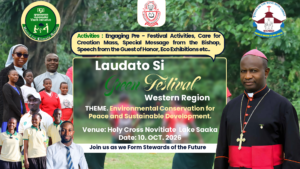
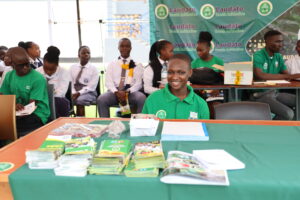
This is where Laudato Si Clubs can make an important contribution. The Laudato Youth Initiative establishes Laudato Si Clubs in schools, universities, parishes, dioceses, and communities. The initiative describes the clubs as a way to bring young people together to take responsibility for caring for the environment and translate environmental awareness into practical action (Laudato Youth Initiative).
The clubs will provide a space where learners do more than complain about floods. They can share thoughts, ask questions, exchange ideas, investigate the causes of flooding in their communities, and propose practical solutions. The Laudato Youth Initiative identifies ecological education, community participation, climate action, and environmental projects as practical responses to the crisis (Laudato Youth Initiative).
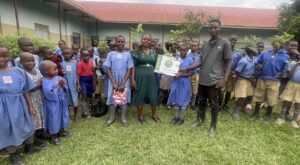
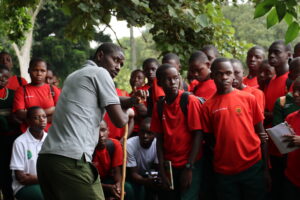
For example, Laudato Si Clubs are organizing a school discussion on flooding, conducting environmental audits of their school compound, identifying blocked drainage points, organizing a clean-up, promoting responsible waste disposal, and encouraging Laudato Youth to develop creative solutions to local environmental challenges.
This approach connects environmental education with action. It also gives learners an opportunity to understand that caring for the environment is not simply the responsibility of government. Families, schools, communities, businesses, religious organizations, and young people all have roles to play.
Flooding in Uganda’s cities should no longer be discussed only after roads are submerged, businesses are damaged, or families are displaced. The 2026 rainfall outlook, together with Kampala’s identification of numerous flood-prone areas, provides an important opportunity for schools to prepare young people to understand and respond to environmental challenges (KCCA, 2026; MWE, 2026).
Now it is time for our schools to ask learners: What causes floods? What are their effects? Who is affected? What can we do differently? And what kind of cities do we want to build for the future?
Laudato Si Clubs are turning these questions into action club projects by engaging members to share thoughts and ideas, discuss the causes and effects of flooding, promote responsible waste management, participate in environmental projects, and develop practical solutions within their schools and communities. The Laudato Youth Initiative will continue to show how young people can organize through Laudato Si Clubs to connect environmental education with practical climate action (Laudato Youth Initiative)
Ultimately, educating learners about floods is not simply about preparing them for the next rainy season. It is about developing a generation that understands the connection between human actions and the environment and is prepared to help build safer, cleaner, and more resilient Ugandan cities.
References
Kampala Capital City Authority. (2026, August 11). KCCA intensifies flood preparedness as El Niño rains loom. https://www.kcca.go.ug/news/1168/kcca-intensifies-flood-preparedness-as-el-nino-rains-loom
Laudato Youth Initiative. Laudato Si Clubs. https://laudato-youthinitiative.org/services/laudato-si-clubs/
Laudato Youth Initiative. Laudato Si’ goals. https://laudato-youthinitiative.org/services/laudato-si-goals/
Ministry of Water and Environment. (2026, August 31). September to December 2026 seasonal climate outlook over Uganda. Uganda Media Centre. https://mediacentre.go.ug/press-room/september-to-december-2026-seasonal-climate-outlook-over-uganda-9mdg





Rusahura Daniel
The time is now.
United for climate action.