Laudato Voices | 15 August, 2026 | El Niño 2026
In a public alert issued yesturday (August 14, 2026), the Office of the Prime Minister (OPM) warned that above-normal rainfall could increase the risk of floods, landslides, infrastructure damage, disease outbreaks, and loss of livelihoods. The warning comes as El Niño strengthens across the tropical Pacific Ocean. The Office of the Prime Minister has warned of possible El Niño-driven heavy rains from September to December 2026, with flood and landslide risks rising as the climate pattern strengthens across the Pacific, with the wet conditions potentially extending into 2027. The US Climate Prediction Center said this week there is more than a 90 percent chance that the event will become very strong during the Northern Hemisphere autumn and winter of 2026-27.
El Niño
El Niño is a natural climate pattern caused by unusual warming of surface waters in the central and eastern equatorial Pacific Ocean. The warming changes winds and rainfall patterns across large parts of the world. The World Meteorological Organization (WMO) reported a rapid development toward a strong El Niño, with forecasts indicating continued intensification. For Uganda, El Niño matters because unusual rainfall can increase the risk of floods, landslides, crop damage, and disease outbreaks (Nations, n.d.). New Vision reported in July 2026 that Ugandan authorities were preparing for possible El Niño rains and were shifting from simply responding to disasters toward anticipating and preventing them (New Vision, 2026; https://www.newvision.co.ug/articledetails/uganda-shifts-disaster-prevention).
So how can we as Ugandans prepare for it ?
Prepare your home
Before heavy rains begin, repair leaking roofs and strengthen weak parts of your house. Clear drainage channels and remove rubbish that could block water. People living near rivers, wetlands or steep slopes should pay special attention to official warnings and evacuation instructions. (Flood alert issued for Kasese and Bundibugyo, 2026)
Protect water and health
Flooding can contaminate drinking-water sources. (Wamyil et al., 2023) Keep water containers covered and follow health authorities’ advice on treating drinking water. Families should also remove stagnant water where possible and sleep under mosquito nets because heavy rains can create mosquito-breeding areas. (Twinomuhangi et al., 2026)
Most of us are from Farming Communities, so we should prepare early
Farmers should follow reliable weather and agricultural advisories from reliable sources; the Ministry of Agriculture, Animal Industry and Fisheries has often shared Weather Advisory information. Let’s share it on our social media so others can access it too. WE also need to protect seeds, livestock, farm equipment, and harvested food from excessive rain. (El Niño, 2026) (FAO & WFP, 2026) The Food and Agriculture Organization (FAO) stresses the importance of anticipatory action, taking steps before a climate shock causes major losses (Food and Agriculture Organization [FAO], 2026).
Follow official warnings
Not every heavy rainfall event is caused by El Niño, and its effects vary by location. WMO advises governments and communities to combine global El Niño information with regional and local forecasts (WMO, 2026c). As Ugandans, we should therefore follow updates from the Uganda National Meteorological Authority, government authorities, and recognized disaster-management agencies.
Why early preparation matters
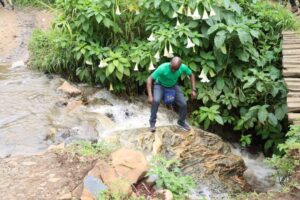
El Niño does not automatically mean disaster. The real danger comes when extreme weather affects communities that are not prepared. (Ndejjo et al., 2026) The government has called for anticipatory action to protect people from potential El Niño-related losses in food, business, and livelihoods. We all know what flash floods have been causing in our local cities recently. New Vision has also reported that Uganda is strengthening its approach to early warning and anticipatory action so that communities can act before floods, landslides, and other hazards become humanitarian crises (New Vision, 2026; https://www.newvision.co.ug/articledetails/uganda-shifts-disaster-prevention). We need to take this warning seriously. Protect children and accompany them to school in areas like Kasese River and Nyamwamba, where floods can happen at any time of day, and many children cross the river on their way to and from school (Doe & Smith, 2025, pp. 45-67). So this season, parents should not send children to the well on their own or send them to school without an elder accompanying them. With good preparation, communities can reduce damage from extreme weather and protect lives, livelihoods, and property.
References
Nations, F. a. (n.d.). El Niño | FAO. FAO. https://www.fao.org/el-nino/en
(May 12, 2026). Flood alert issued for Kasese and Bundibugyo. Uganda Media Center. https://mediacentre.go.ug/press-room/flood-alert-rwenzori
New Vision. (2026, July 4). Uganda shifts from disaster response to prevention. New Vision Uganda. https://www.newvision.co.ug/articledetails/uganda-shifts-disaster-prevention
Twinomuhangi, R., Sseviiri, H., Mayhew, S. H. & Sahani, M. K. (2026). Examining the effects of climate and environmental hazards on vector and water-borne diseases in Eastern Uganda. Discover Environment 4. https://doi.org/10.1007/s44274-026-00616-4
(July 7, 2026). El Niño. FAO. https://www.fao.org/climate-change/news/news-detail/extreme-heat-in-an-el-ni%C3%B1o-year–how-agrifood-systems-can-prepare/en
Ndejjo, R., Karuhanga, S., Helldén, D., Mohamed, I. S., Marten, R., Alfvén, T. & Wanyenze, R. K. (2026). Community experiences of the impacts of climate-induced extreme weather events in Uganda: A qualitative study. PLOS Global Public Health 6(3).
Doe, J. & Smith, J. (2025). Flood Risk Assessment in Kasese District, Uganda. Journal of Environmental Science 12(3), pp. 45-67.
World Meteorological Organization. (2026, June 2). WMO: Prepare for El Niño.
World Meteorological Organization. (2026, July 3). El Niño is forecast to intensify, increasing likelihood of extreme weather.