Uganda is widely known as the “Pearl of Africa” because of its fertile soils, abundant water resources, and favorable climatic conditions that support agricultural production. Agriculture remains the backbone of Uganda’s economy, employing approximately 70% of the population and contributing significantly to household incomes and national food security (Food and Agriculture Organization [FAO], 2024). Despite its agricultural potential, Uganda continues to experience recurring food crises that threaten the livelihoods of some of its people.
Food insecurity in Uganda is driven by a complex combination of climate change, environmental degradation, poverty, rapid population growth, conflicts, refugee influxes, inadequate investment in agriculture, and global economic shocks. According to the World Food Programme (WFP, 2025), millions of Ugandans continue to face acute food insecurity, particularly in the Karamoja sub-region and refugee settlements, where prolonged droughts, erratic rainfall, and funding shortages have significantly reduced access to food assistance.
What we need to know is the food crisis is not merely an agricultural issue; it is a humanitarian, economic, environmental, and moral challenge that demands collective action from governments, development partners, faith communities, civil society, and citizens.
Root Causes of Uganda’s Food Crisis
Climate Change and Extreme Weather
Climate change is one of the leading drivers of food insecurity in Uganda. The country has experienced increasingly unpredictable rainfall patterns characterized by prolonged droughts, delayed rainy seasons, floods, and rising temperatures. These climate-related shocks have severely affected crop production and livestock farming, particularly in the semi-arid Karamoja region, where agriculture depends heavily on seasonal rainfall (FAO, 2024).
Frequent droughts have reduced harvests, destroyed pasture for livestock, and depleted water sources, while heavy rains and floods have washed away crops, damaged roads, and increased post-harvest losses (World Food Programme [WFP], 2025). Smallholder farmers, who produce most of Uganda’s food, are particularly vulnerable because the majority rely on rain-fed agriculture with limited irrigation infrastructure.
Poverty and Low Agricultural Productivity
Although agriculture is Uganda’s largest employer, productivity remains relatively low due to limited access to quality seeds, fertilizers, irrigation technologies, mechanization, agricultural extension services, and affordable credit (FAO, 2024). Many farmers continue to practice subsistence agriculture, producing just enough food for household consumption while earning little surplus income.
Inadequate rural infrastructure, including poor roads, insufficient storage facilities, and weak market systems, further contributes to post-harvest losses and reduces farmers’ incomes, making it difficult for households to withstand climatic and economic shocks.
Environmental Degradation
Environmental degradation has become a significant contributor to declining agricultural productivity in Uganda. Deforestation, wetland destruction, soil erosion, and unsustainable farming practices have reduced soil fertility and weakened ecosystems that support food production (United Nations Environment Programme [UNEP], 2023).
The continued loss of forests also contributes to climate change by reducing carbon sequestration while increasing the vulnerability of communities to droughts and floods. Healthy ecosystems are essential for sustainable agriculture, water conservation, and biodiversity.
Refugee Pressure
Uganda hosts one of the largest refugee populations in the world, with more than 1.8 million refugees, mainly from South Sudan and the Democratic Republic of the Congo (WFP, 2025). While Uganda’s refugee policy is internationally recognized for its generosity, the large refugee population places considerable pressure on land, water resources, food supplies, health services, and humanitarian assistance.
Funding shortages have forced humanitarian organizations, including the World Food Programme, to reduce food rations for refugees, increasing the risk of hunger and malnutrition among vulnerable populations (WFP, 2025).
Rapid Population Growth
Uganda has one of the fastest-growing populations globally, increasing the demand for food, land, and employment opportunities (World Bank, 2024). As families expand and landholdings become smaller through inheritance and subdivision, agricultural productivity struggles to keep pace with rising food demand.
Global Economic Challenges
Global inflation, disruptions in international supply chains, rising fuel prices, and declining humanitarian funding have contributed to increased food prices and reduced purchasing power for vulnerable households. These global shocks have compounded domestic challenges and intensified food insecurity across the country (World Bank, 2024).
Impact of the Food Crisis
The consequences of Uganda’s food crisis extend well beyond hunger.
Malnutrition
Food insecurity contributes to widespread malnutrition, particularly among children under five years of age. Chronic undernutrition has resulted in high levels of stunting, wasting, weakened immune systems, and impaired cognitive development, limiting children’s educational achievement and future productivity (WFP, 2025).
Increased Poverty
Poor harvests reduce household incomes, forcing many families to sell livestock, productive assets, or agricultural land to survive. These coping mechanisms often deepen long-term poverty.
Poor Educational Outcomes
Children who experience hunger often struggle to concentrate in school, resulting in lower attendance, poor academic performance, and increased school dropout rates.
Public Health Challenges
Undernutrition weakens immune systems, increasing vulnerability to infectious diseases while placing additional pressure on Uganda’s healthcare system.
Social Instability
Competition for scarce resources such as land, pasture, and water may contribute to local conflicts, displacement, and increased migration from rural to urban areas.
What Needs to Be Done?
Addressing Uganda’s food crisis requires coordinated efforts across multiple sectors.
Priority interventions include:
- Investing in climate-smart agriculture and irrigation systems.
- Promoting drought-resistant and high-yield crop varieties.
- Restoring forests, wetlands, and degraded landscapes.
- Expanding agricultural extension services and farmer training.
- Improving rural roads, storage facilities, and market access.
- Increasing access to agricultural finance and insurance.
- Supporting women and young people engaged in agriculture.
- Strengthening early warning systems for droughts and floods.
- Expanding nutrition programs for mothers and children.
- Sustaining international humanitarian assistance for refugees and vulnerable communities.
These measures can improve resilience while strengthening Uganda’s long-term food security.
The Catholic Church’s Perspective
The Catholic Church teaches that access to adequate food is a fundamental human right rooted in the dignity of every person created in the image of God (Pontifical Council for Justice and Peace, 2004). Hunger is therefore not merely an economic challenge but a moral issue that calls for justice, compassion, and solidarity.
Catholic Social Teaching provides important principles for responding to food insecurity.
Human Dignity
Every person possesses inherent dignity and deserves access to sufficient food, clean water, healthcare, and opportunities for a dignified life (Pontifical Council for Justice and Peace, 2004).
The Common Good
Food security is a shared responsibility. Governments, communities, civil society, and international organizations must work together to ensure that all people can meet their basic needs.
Preferential Option for the Poor
The Church emphasizes that society should prioritize the needs of the poor, especially children, refugees, smallholder farmers, older persons, and marginalized communities who are disproportionately affected by hunger.
Solidarity
Solidarity reminds humanity that we belong to one human family. The suffering of hungry communities should move individuals, institutions, and nations toward compassionate action.
Stewardship of Creation
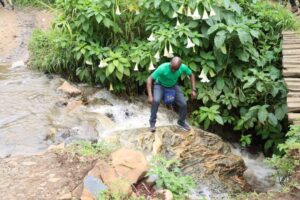
The Church teaches that human beings are entrusted with caring for God’s creation. Protecting forests, water resources, soils, and biodiversity is therefore both an environmental obligation and a moral responsibility.
Laudato Si’ and Uganda’s Food Crisis
Pope Francis’ encyclical Laudato Si’ offers one of the most comprehensive faith-based responses to today’s environmental and humanitarian crises. Pope Francis argues that “the cry of the earth and the cry of the poor” are inseparable because environmental degradation disproportionately affects vulnerable communities (Francis, 2015).
The encyclical explains that climate change, pollution, deforestation, and unsustainable patterns of production and consumption contribute directly to poverty, hunger, and inequality. It calls for an “integral ecology” that recognizes the interconnectedness of environmental protection, social justice, economic development, and human dignity.
In Uganda, this vision encourages investment in sustainable agriculture, environmental restoration, climate resilience, and inclusive economic development that protects both people and creation.
A Call from the Laudato Youth Initiative
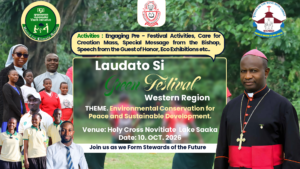
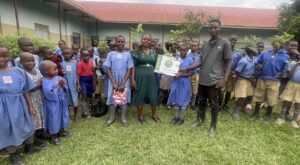
Inspired by the teachings of Laudato Si’, the Laudato Youth Initiative calls upon young people in Laudato Si Clubs, faith communities, governments, civil society organizations, and all people of goodwill to respond to Uganda’s food crisis with compassion, responsibility, and hope.
The mission as stewards of the future reminds us that behind every statistic is a human story, is a child going to school hungry, a farmer whose crops have failed because of drought, a mother sacrificing her own meal so her children can eat, or a refugee seeking safety while struggling to access adequate food.
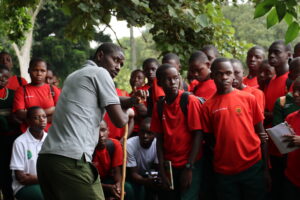
The Laudato Youth Initiative encourages young people to become ambassadors of integral ecology by promoting sustainable agriculture, protecting the environment, reducing food waste, supporting vulnerable communities, and advocating for policies that uphold justice and human dignity. Caring for creation and caring for the poor are inseparable responsibilities that reflect God’s love for humanity.
As Pope Francis reminds us, authentic development cannot ignore either people or the planet (Francis, 2015). The Laudato Youth Initiative therefore calls upon every individual to open their hearts to those who suffer from hunger, to share generously with those in need, and to work together in building communities rooted in solidarity, justice, and hope. By responding with compassion and concrete action, we participate in God’s mission of healing both humanity and our common home.
The Question to ponder.
What is mu school, organization or Community doing of this?
We count on your prayers and action
References
Food and Agriculture Organization of the United Nations. (2024). FAO country programming framework: Uganda. https://www.fao.org/uganda/en/
Francis. (2015). Laudato Si’: On care for our common home. Vatican Publishing House. https://www.vatican.va/content/francesco/en/encyclicals/documents/papa-francesco_20150524_enciclica-laudato-si.html
Pontifical Council for Justice and Peace. (2004). Compendium of the social doctrine of the Church. Libreria Editrice Vaticana. https://www.vatican.va/roman_curia/pontifical_councils/justpeace/documents/rc_pc_justpeace_doc_20060526_compendio-dott-soc_en.html
United Nations Environment Programme. (2023). Uganda: Environment and natural resources. https://www.unep.org/
World Bank. (2024). Uganda overview. https://www.worldbank.org/en/country/uganda/overview
World Food Programme. (2025). Uganda country brief. https://www.wfp.org/countries/uganda