Theme: “Console Our Sister & Mother, Earth”
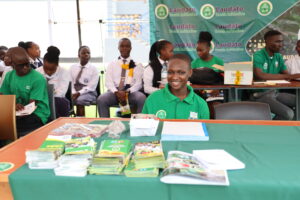
The Rector, Priests, Religious, Distinguished Educators, Dear Students, Invited Guests, Ladies and Gentlemen. It is both a privilege and a profound joy to stand before you today at Kitabi Seminary as we gather for this important Laudato Si’ Seminar under the inspiring theme: “Console Our Sister & Mother, Earth.”
I extend my sincere appreciation to the Rector and the entire Seminary community for organizing this timely gathering. It reflects not only a commitment to academic excellence but also a deep concern for our common home and our shared responsibility to protect it.
Our theme today is deeply rooted in the vision of Pope Francis as expressed in his encyclical Laudato Si’. The Holy Father reminds us that the earth is not merely a resource to be exploited. She is our sister, sharing life with us, and our mother, who generously provides everything necessary for our survival.
Like a loving mother, she nourishes us with fertile soil, clean water, fresh air, forests, rivers, mountains, and the beauty of creation that fills our hearts with wonder, gratitude, and praise to God. Yet today, this sister and mother is suffering.
- She suffers because her forests are disappearing.
- She suffers because her rivers are polluted and her lakes are becoming acidified.
- She suffers because countless species of wildlife are disappearing.
- She suffers because the climate is changing, bringing floods, droughts—as many communities are experiencing even now—landslides, and rising temperatures.
- She suffers because of the ever-growing burden of waste, especially plastic pollution.
These are not distant realities. In many parts of Uganda, including our own communities here in the western region, we are already witnessing their consequences. Farmers face increasingly unpredictable seasons. Soil fertility continues to decline. Natural habitats are disappearing before our eyes. These are not merely environmental problems; they are profoundly human problems. Whenever the earth suffers, humanity suffers as well.
The theme of today’s seminar does more than invite us to recognize the suffering of Mother Earth. It challenges us to console her.
To console someone is to comfort them, to stand beside them, to heal their wounds, and to restore hope. Mother Earth will not be consoled by beautiful speeches alone or by inspiring slogans. She will be consoled by the choices we make and the actions we take every day.
- We console Mother Earth every time we plant and nurture a tree—whether at school, at home, or wherever we find ourselves.
- We console her every time we protect a wetland.
- We console her whenever we dispose of waste responsibly by separating organic matter from inorganic matter.
- We console her whenever we conserve water and energy by avoiding unnecessary waste and switching off electricity when it is not needed.
- We console her whenever we refuse unnecessary plastic.
- And we console her every time we inspire another person to love, respect, and care for God’s creation.
The environmental crisis is also a spiritual crisis. Too often, humanity has forgotten that creation belongs to God. We have behaved as owners rather than as stewards.
The Book of Genesis tells us that humanity was placed in the garden “to cultivate and care for it.” Dominion was never a licence to destroy. Authority was never permission to exploit. Rather, it is a sacred responsibility to exercise loving stewardship over God’s creation.
Dear students,
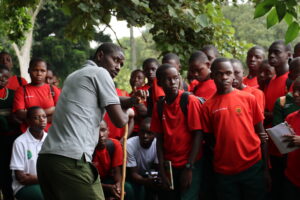
You belong to the generation that will shape the future of our planet. Your education is preparing you not only for careers but also for responsible citizenship and faithful stewardship of creation. Never imagine that you are too young to make a difference.
- One student can begin a tree-planting initiative.
- One class can eliminate plastic waste within a school.
- One committed young person can inspire hundreds of others.
History repeatedly teaches us that great movements often begin with a small number of people who choose courage over indifference. We count on each one of you.
Dear educators,
Yours is a noble vocation. Education is far more than the transfer of knowledge; it is the formation of conscience.
- Every lesson can cultivate respect for creation.
- Every science class can deepen appreciation for biodiversity.
- Every school can become a living laboratory of ecological conversion, where students do not merely study environmental conservation but practise it daily through their choices and actions.
As a seminary, Kitabi has an even greater mission.
The future priests formed here will one day preach the Gospel, celebrate the sacraments, accompany families, and guide communities in faith.
They are also called to become prophets of ecological justice, reminding the faithful that caring for creation is not an optional concern but an essential dimension of Christian discipleship. The Church has always defended the dignity of every human person. Today, she also calls us to defend the dignity of our common home, because the two cannot be separated.
As Pope Francis reminds us, the cry of the earth and the cry of the poor are one and the same cry.
Dear friends,
Our world does not need more people who simply admire nature.
- It needs people who protect it.
- It does not need more consumers.
- It needs more stewards.
- It does not need more exploitation.
- It needs more responsibility.
- It does not need more indifference.
- It needs compassion.
As we participate in this seminar, may each one of us reflect sincerely:
- How am I contributing to the healing of our common home?
- What habits must I change?
- What legacy will I leave for future generations?
When history judges our generation, will it say that we ignored the cries of Mother Earth, or will it say that we rose together to console her?
There is still reason for hope.
Nature possesses a remarkable capacity to recover whenever human beings choose wisdom instead of greed, cooperation instead of selfishness, and stewardship instead of exploitation. Every positive action, no matter how small, contributes to the healing of creation. May this seminar become more than a single event. May it mark the beginning of a renewed commitment to ecological conversion. May every participant leave this place as an ambassador of Laudato Si’, carrying its message into our homes, schools, parishes, institutions, and communities.
Before I conclude, I wish to express my heartfelt gratitude to Fr. Acleo Kihembo and to everyone who has contributed in one way or another to make this seminar a success. Your dedication and commitment are deeply appreciated. May God bless each one of you. May He bless our efforts to care for our common home. And may He grant us the wisdom, courage, and perseverance to console our sister and mother, Earth.
Thank you.
Fr. Daniel Manzi
Diocesan Laudato Si’ Focal Person
Mbarara Archdiocese