The LSiGF

Guest of Honor: Rt. Hon. Justine Kasule Lumumba


Martyr Ecology Relationship
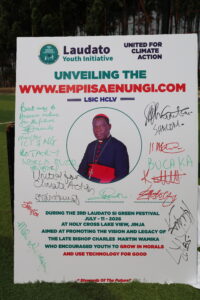
“The youth of today, you seem more affected by modern life: smartphone- internet, empiisa enungi (good manners) seem to have been thrown overboard. The majority of the Uganda Martyrs were youth like you. When you grow old, how about creating a website? “WWW.EMPIISA ENUNGI.COM”. Dear pilgrims, look around and take note when you get back home, what is it that you will share about the Martyrs? May the Lord increase your faith so that you get whatever you asked for today. Listen to the bishop’s message
The Late Bishop Charles Martin Wamika
Nearly a year after Bishop Wamika’s passing, this project honors his legacy of pastoral care for youth and inspires faith and innovation. Bishop Charles Martin Wamika often said, “With faith, there are no jokes,” and encouraged devotion to the Uganda Martyrs as role models of faith and hard work. He urged young people to lead dignified lives guided by hard work and to embrace scientific innovation that uses technology for good. As a scientist, he encouraged youth to use technology to address societal challenges and to minister through media to make God known, loved, and served.

What the Bishop actually said
Bishop Wamika observed that smartphones and the internet are transforming the lives of young people in Uganda by expanding access to information, communication, and global culture. However, he cautioned that these advancements also present significant moral and social challenges. He urged young people to draw inspiration from the courage and faith of the Uganda Martyrs and to be guided by the principles of Catholic Social Teaching. In doing so, they should use digital technology responsibly, safeguarding human dignity, strengthening their faith, and promoting the common good within the framework of African cultural and moral values.
Empiisa Enungi, “Good Manners” Have Been Thrown Overboard
In many Ugandan communities, Empiisa Enungi represents core virtues such as respect for elders, adherence to family and cultural norms, humility, honesty, responsibility, discipline, and care for others. Traditionally, families, communities, and religious institutions instilled these values. However, rapid social change, urbanization, and the widespread influence of digital technology have eroded these moral foundations among some youth. Bishop Wamika’s message called for restoring and upholding these essential values.
What the Laudato Youth Initiative is going to do following this launch
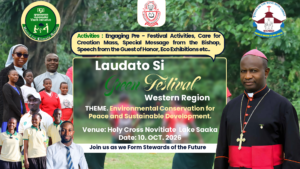
Br. Adolf reaffirmed the Laudato Youth Initiative’s commitment to leading both cultural and environmental conservation in Uganda. He reiterated the theme: “Environmental Conservation for Peace and Sustainable Development.” He encouraged members of Laudato Si Clubs to participate in programs and activities offered by mentors and patrons to strengthen the African interpretation of Laudato Si. The focus is on building community, learning from one another, and fostering genuine relationships that transform lives and create belonging. He encouraged making genuine friends, being a good friend, and seeking mentorship from elders to build a better future. He also emphasized understanding our connection with God and the natural environment.
In Laudato Si, Pope Francis teaches that everything is interconnected through integral ecology, meaning environmental and social crises are linked, and “Everyone’s talents and involvement are needed” (LS 14).
Magnifica Humanitas
This vision aligns with the teachings of Pope Leo XIV, as outlined in his first encyclical, Magnifica Humanitas: On Safeguarding the Human Person in the Time of Artificial Intelligence, released on May 25, 2026. This mission is central to the Bishop Martin Wamika Legacy Program. The day concluded with tree planting, science eco-innovation exhibitions, and youth talent showcases.
“AS PART OF THE PRACTICAL APPROACH, ALL LAUDATO SI CLUBS BY THE LAUDATO YOUTH INITIATIVE ARE ENCOURAGED TO EMBRACE THE PROGRAM WITH VARIOUS APPROACHES WHICH WILL EMPHASISE DIGITAL INNOVATIONS – USING TECHNOLOGY FOR THE GOOD, TRAINING LAUDATO YOUTH IN AFRICAN ECO-SCIENCE SKILLS, TO ERADICATE POVERTY AND EMPOWER YOUTH IN SELF-EMPLOYMENT,” SAID BR. ADOLF
Technology and The Environment
In her speech, ICT and National Guidance Minister Hon. Lumumba explained how technology can reduce environmental impact and provide practical solutions for agriculture. She highlighted several AI applications in farming:

Pest Detection: Farmers can use smartphones to photograph crops, enabling AI to identify threats such as the fall armyworm.
Precision Agriculture: AI can recommend the appropriate type and amount of treatment for each plant, as well as the correct application method, such as spraying leaves or treating the soil.
Livestock Health: AI can analyze animal photographs to identify potential internal health issues. It can also verify the quality of veterinary medicines, reducing the risk of counterfeit or ineffective products. She thanked the festival organizers for promoting faith-based environmental action and for developing an initiative that educates and engages people of all ages, starting with the youngest.
She challenged students to use modern technology purposefully, rather than as a distraction. She encouraged them to value their education and apply their knowledge and skills to address challenges in their communities and across the country. She emphasized that building a safe and inclusive digital environment in Uganda requires collective effort.
She expressed appreciation for the eco-innovations at the Laudato Si Green Festival, which many described as a launchpad for Uganda’s next generation of environmental leaders.
This program by the Laudato Youth Initiative aligns with Uganda’s environmental conservation efforts and the church’s vision of guiding responsible technology use. The Laudato Youth Initiative aims to form future stewards and safeguard cultural and moral values to help build peace and a sustainable future.