Integral ecology is not just a concept, but a way of life. It invites us to connect with God, creation, and one another. Drawing on the legacies of St. Adolf Mukasa Ludigo and the Uganda Martyrs, this article reflects on how we can build a healthier society for future generations by weaving faith, ecology, and modern challenges into a single narrative inspired by the courage and life of St. Adolf.
St. Adolf Mukasa Ludigo was put in charge of the Kabaka’s gardens, where pages were supposed to work. He got into contact with the missionaries while the palace was at Kasubi and then he he was baptized on the 16th of November 1885 by Fr. Simeon Lourdel Simeon Mapeera (also known as Fr. Mapera), one of the pioneering White Fathers in Uganda. He received Christian instruction and was baptized on November 17, 1885. On anticipating his death, Ludigo was very happy and wore his best, then was burnt alive on the 3rd of June 1886 in Namugongo at the age of about twenty-five years.
Uganda Martyrs Day and the Legacy of St. Adolf Ludigo
Every year, pilgrims gather at the St. Adolf Katoosa Catholic Shrine in Kyenjojo District on January 27th to honor Saint Adolf Ludigo Tibeyalirwa Abwooli and on 3rd, June Uganda observes a public holiday to commemorate the Uganda Martyrs. Pilgrims from all over the world gather at the Uganda Martyrs Shrine in Namugongo to remember their sacrifice and renew their faith.
St. Adolf is also regarded as a patron saint of farmers, and herdsmen, reflecting both his background and the everyday lives of the people he represents. His devotion was seen in his moral uprightness, humility, readiness and courage to stand for his faith. His story continues to inspire generations, especially young people in the Laudato Youth initiative to lead a life of integrity, stand firm in faith, and embrace the Gospel even amidst challenges as youth. The challenges of our time may differ from those of St. Adolf, but the call remains the same: to integrate faith, values and action, and to recognize, as Pope Francis highlighted in Laudato Si’ (2015), that the environmental crisis and social injustice are a single, complex crisis.
Contemporary Challenges of the Youth
Youth in Uganda, who make up the majority of the country’s population, face critical obstacles transitioning to adulthood ranging from Unemployment, an education system is transitioning from memorization to practical skills, poverty even at family level making it hard to afford good living costs, mental health issues even arising from climate change, uncertain food security, Moral detoriation among the youth resulting even into HIV in some cases, shifting attitudes and involvement in faith matters, Climate change effects, technology (Social Media) limited resources among others are the most pressing contemporary challenges. The Laudato Youth Initiative itself made of youth came up with an integral approach inspired by the faith of St. Adolf and Laudato Si to inspire youth to become protagonists of their own stories, work hard and form clubs in schools, Universities, communities and Dioceses to unite youth for action that will help build value systems and share knowledge on practical ways of integrating intergal ecology which looks at the welfare of the people and the environment. St. Adolf is such and example. he worked hard with humility and Faith and today he is celebrated as patron of Herdsman and farmers.
Pope Leo XIV, in his first encyclical Magnifica Humanitas (May 2026), condemns the unchecked use of technology that threatens humanity. He calls for disarming AI and safeguarding the human person in the age of Artificial Intelligence, stating that “Young People Deserve Protection Online.” The Pope expresses particular concern about digital stimulation, addictive applications, online exploitation, and cultural pressures affecting the mental health and identity of young people. He advocates for collaboration among families, schools, and governments to foster healthier digital environments and prioritize the common good. To respond to this challenge Laudato Youth are Raising Voices towards responsible use of Ai
The Laudato Youth Initiative: Faith, Service, and Ecology
The Pope’s is challegeing us to face hard realities with faith and courage . Like the Uganda Martyrs, today’s youth need courage, fidelity, and the transformative power of faith. That is why the Laudato Youth Initiative chose St. Adolf Ludigo as its patron, an example for a life of hope, faith, service, and integral ecology.
Through reflecting on his life we also believe that agriculture can be harmonized to promote or national heritage as an agricultural country while respecting and protecting the environment, in accordance with the principles of environmental sustainability and care for our common home outlined in the Encyclical Laudato Si’, SDG like 13 and the Church’s social teaching. A country Like Uganda whose motto is for God and My Country is best placed when it adopts an integral approach given clearly outline in Laudato Si and the Life of the Uganda Martyrs.
St. Adolf Ludigo is the patron of farmers and herdsmen.
St. Adolf, patron saint of farmers and herdsmen, reflecting his grassroots roots, the youth and the everyday life of the people he represents. His patronage stems from these roles, his agricultural background, and his kidnapping from the agrarian region of Toro. Before his martyrdom, he is remembered as calm, intelligent, and a humble worker who happily cooked for and served his fellow Christians. “Service was one of his life values”. When we thought of a patron Saint to inspire our initiative, St. Adolf stood out as a patron of integral ecology, as a seed of hope for integral ecology.

The Martyr-Ecology Relationship
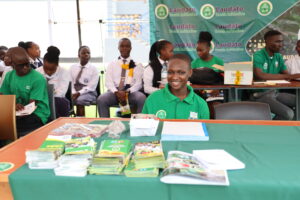
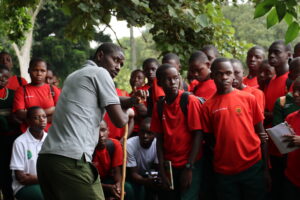
The intersection of faith and ecology grounds our interpretation of Laudato Si’, Pope Francis’s encyclical. We focus on forming Laudato Si’ Clubs in institutions, communities, and dioceses, where, through Integral Ecology, youth are formed in faith and action. Our activities that include tree planting as a regeneration effort, ecological education, and harmonizing agriculture and innovation while respecting and protecting the environment, according to the principles of environmental sustainability and the Church’s social teaching help us form Laudato Youth build structures for a greener future and form stewards of the future.
Forming young people on the path to “ecological conversion” that aligns with Laudato Si’s call for ethical, social, and environmental transformation, but also a guiding framework that shapes Integral Ecology in practice, fosters community resilience, and bridges ecological restoration. By engaging with both religious and indigenous wisdom, we model a holistic approach to sustainability, offering creative solutions to the emerging climate change issues by arguing that integrating spiritual and cultural values into climate action enhances ethical commitment and supports our Country in building sustainable futures.
Integral Ecology as a Way of Life
Integral ecology is not just a concept, but a way of life, one that invites us to connect with God, creation, and one another. Reflecting on the legacy of the Uganda Martyrs and St. Adolf. The Uganda Martyrs exemplified integral ecology through their lives and sacrifices. Many respected and preserved endagered species through totems, used them as sacred symbols as a way to protect them. Most Ugandan clans and cultures still embrace animals, trees and birds totems, and these stories serve as powerful testimonies of faith and the harmonious relationship between humanity and creation.
As we celebrate the 62nd anniversary of the canonization of the Uganda Martyrs, we must also recognize technology as one of the greatest challenges of our time, threatening cultures and value systems if not well utilized. Pope Leo XIV calls us to address these challenges, specifically highlighting concerns about digital stimulation, addictive applications, online exploitation, and cultural pressures that impact the mental health and identity of young people.
Most of the Uganda Martyrs were young people who led exemplary lives marked by prayer and sacrifice. Their faith-filled witness offers a model for today’s youth, showing the importance of living with purpose and integrity. There is a crucial need for strong collaboration among families, schools, and governments to foster healthier digital environments. By forming young people in strong faith and supporting them against self-destructive behaviors, we can raise a generation whose lives will inspire those who follow.
The Moral Legacy of the late Bishop Charles Martin Wamika
We call to mind the message of the late Bishop Charles Martin Wamika during the 2023 Uganda Martyrs Day celebrations at Namugongo Shrine on June 3, 2023—a message calling young people to live with integrity, faith, and purpose in the digital age. when he said
“The youth of today, you seem more affected by modern life: smartphone- internet, empiisa enungi (good manners) seem to have been thrown overboard. The majority of the Uganda Martyrs were youth like you. When you grow old, how about creating a website? “WWW.EMPIISA ENUNGI.COM”. Dear pilgrims, look around and take note when you get back home, what is it that you will share about the Martyrs? May the Lord increase your faith so that you get whatever you asked for today.”
Laudato youth initiative have taken on this initiative that now will inform our response to Pope Leo XIV’s first encyclical, Magnifica humanitas, on safeguarding the human person in the time of artificial intelligence, released on May 25, 2026.
Youth as Protagonists of Our Story
All the above challenge us to form young people who will be witnesses to the work of our generation, communicating values, defending our culture and heritage, and exemplifying humility. This challenge is a lesson for all of us to work for the betterment and future of our country, defining our cause and purpose. As technology and social media threaten to overshadow our values, it is crucial to form the mindset of youth who will become protagonists of the good in a world where technology risks erasing human and Indigenous stories, stories that shape our family lineages, cultures, faith, and belief systems. Forming young people in an integral way is essential to preserving these vital narratives. Just like the witness of St. Adolf Continues to inspire us today.
Pope Francis’s message in Laudato Si’ (2015) asserts that the environmental crisis and social injustice are a single, complex crisis. Environmental protection and human dignity are inseparable; we cannot care for nature without defending the vulnerable poor, nor can we protect human dignity without a healthy, sustainable environment. The Uganda Martyrs exemplify this truth through their witness. Putting Laudato Si’ into practice invites our nation to adopt “an integrated approach to combating climate change and poverty for the well-being of all,” one which “protects nature” while also “restoring dignity to the vulnerable poor” (LS 139). Pope Francis, in Laudato Si’, advocates for “integral human development”, growth that is balanced with care for the natural world, human culture, and the poor and vulnerable.
The Laudato Youth Initiative
LYi is a witness of hope. We choose St. Adolf, a Ugandan martyr, as a patron to exemplify a life of hope devoted to promoting integral ecology. His legacy inspires or Laudato Youth to advance the African interpretation of Laudato Si’ and champion care for our common home. We all now know that even farmers can become saints which is the greatest human actualisation. Our work therfore also focuses on building our national heritage as an agricultural nation that can be harmonize farming with values that respecting and protecting the environment, intergation of technology following the principles of environmental sustainability outlined in Laudato Si’, Laudate Deum, and the Church’s social teaching. Happy Uganda Martyrs Day 2026
About Author
Laudato Voices | Happy Uganda Martyrs Day 2026 | Celebrating The Legacy of St. Adolf Mukasa Ludigo
St. Adolf Mukasa Ludighno is the patron Saint for the Laudato Youth initiative. We join the rest of the world to celebrate our patron, but also the faith and hope brought by the Uganda Matters who sowed seeds of peace and Hope.