Laudato Voices | Ecologia integrale nella vita della famiglia | April 27, 2026
Integral ecology in the life of the family, a new joint document of the Dicastery for Promoting Integral Human Development and Dicastery for Laity, Family and Life, to educate us about the care of Creation and human life, comes out a week after the first year death anniversary of Pope Francis, (27 April, 2026) the father of the Encyclical Letter Laudato si’ on care for our common home (24 May, 2015). This new Vatican document, “Ecologia integrale nella vita della famiglia,” offers a powerful yet practical vision for transforming the world, starting with daily life in our families, the foundation of our faith and life. Based on the teachings of Pope Francis, especially in Laudato si’ and Amoris Laetitia, the text depicts integral ecology as a way of living that connects care for the Earth, care for people, and spiritual renewal (Dicastero per il Servizio dello Sviluppo Umano Integrale & Dicastero per i Laici, la Famiglia e la Vita, 2026).
Everything Is Connected
“Everything is connected.” This refrain, in various forms, appears at least ten times in Pope Francis’s 2015 encyclical Laudato Si’. Francis refers to the relationships between organisms within an ecosystem and between the natural environment and human society, and the same is true of the main themes in his teaching. The new document insists that environmental crises, social inequality, and individual well-being are not separate issues; they are intertwined. To care for nature while ignoring the poor, or to pursue social justice without managing environmental harm, is to miss the bigger picture (Dicastero per il Servizio dello Sviluppo Umano Integrale & Dicastero per i Laici, la Famiglia e la Vita, 2026).
This is the essence of integral ecology: a vision where relationships—with God, with others, and with creation—are restored together.
The Strength of Small Beginnings
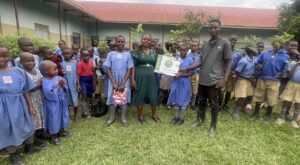
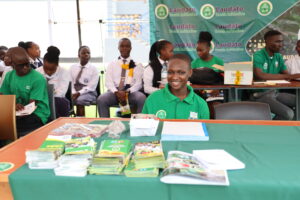
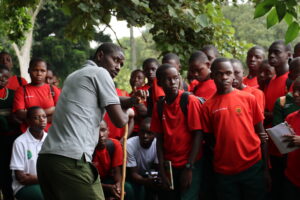
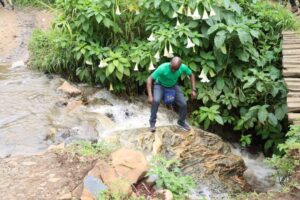
We at Laudato Youth Initiative believe deeply in the strength of small beginnings. The document strengthens our approach by saying, “Rather than focusing first on large-scale activism, the document highlights the transformational power of ordinary life.” The family is described as the “first school” of ecological living, a place where habits, values, and attitudes are formed (Dicastero per il Servizio dello Sviluppo Umano Integrale & Dicastero per i Laici, la Famiglia e la Vita, 2026). In the same spirit, the Laudato Youth Initiative forms small families of Laudato Si Clubs within institutions, striving to unite young people to work together with mentors as a family, advancing creative habits and behaviors that strengthen care for our common home. An example of one of our clubs that came up with its daily practice habits as follows;
For us as young people, this insight is liberating and true to our goal. You don’t need to wait for influence or authority to make a difference. Change begins now:
* Choosing simplicity over excess
* Cutting waste and rethinking consumption
* Living in gratitude rather than entitlement
* Cutting waste and rethinking consumption
* Living in gratitude rather than entitlement
These everyday actions form the basis of lasting transformation.
Ecology and Justice Go Hand in Hand
A recurring theme is the call to listen to both the cry of the Earth and the cry of the poor. Environmental degradation and human suffering are deeply linked, and any authentic response must address both (Dicastero per il Servizio dello Sviluppo Umano Integrale & Dicastero per i Laici, la Famiglia e la Vita, 2026).
For us at Laudato Youth initiative, this entails moving past surface-level sustainability toward deeper responsibility:
* Solidarity with vulnerable communities
* Awareness of global impacts of local choices
* Allegiance to dignity and equity
* Awareness of global impacts of local choices
* Allegiance to dignity and equity
Integral ecology is not just environmental—it is ethical and social.
Building Communities of Change
Transformation spreads through relationships. Just as families shape culture, so too do we at Laudato Youth Initiative form Laudato Si clubs in communities, schools, and peer networks. The document highlights how small, value-driven communities can influence wider society (Dicastero per il Servizio dello Sviluppo Umano Integrale & Dicastero per i Laici, la Famiglia e la Vita, 2026).
We have seen our young people:
* Create shared eco-friendly practices
* Encourage dialogue on values and purpose
* Live out faith in tangible ways and inspire community action a journey to trasformation.
* Encourage dialogue on values and purpose
* Live out faith in tangible ways and inspire community action a journey to trasformation.
These communities become seeds of cultural renewal and ecological hope.
A Spirituality for the Earth.
The document emphasizes that ecological conversion is also spiritual. Without inner change, external efforts risk becoming superficial (Dicastero per il Servizio dello Sviluppo Umano Integrale & Dicastero per i Laici, la Famiglia e la Vita, 2026). We strongly believe in the strength of faith in integral ecology. Our faith programs tend to form hearts loyal to God and keen to care for their creator, helping create an increasingly sustainable world.
Youth are invited to cultivate:
* Gratitude for creation
* Reflection and contemplation with action activities that glorify God
* A sense of vocation in caring for the world
* Reflection and contemplation with action activities that glorify God
* A sense of vocation in caring for the world
This spirituality sustains long-term commitment and meaning.
This is a witness of transformation.
If the path to a more righteous and sustainable world begins in daily life, in relationships, habits, and choices. We are walking together as a human family. For us in the Laudato Youth Initiative, the message is clear: We are called to live differently. Build communities that reflect our values. Let our lives become our message, and let our actions be our voice and our witness to our love of God and our role as caretakers for his creation. In the words of Pope Leo XIV, at the Raising Hope Conference, “God will ask us if we have cultivated and cared for the world that He created, and if we have taken care of our brothers and sisters. What will be our answer?” Here, integral ecology becomes real not through conceptual values, but through lived experience and accountability. If we all decided to take one step at a time, our world would become a better place for everyone.

Reference (APA 7th Edition)
Dicastero per il Servizio dello Sviluppo Umano Integrale, & Dicastero per i Laici, la Famiglia e la Vita. (2026). Ecologia integrale nella vita della famiglia. https://www.humandevelopment.va/pt/news/2026/ecologia-integrale-nella-vita-della-famiglia-documento-congiunto-dicasteri.html
Vatican News https://www.vaticannews.va/en/pope/news/2025-10/pope-leo-xiv-ecological-conversion-begins-in-the-heart.html
Scarel, E. A. (2021). Climate change in the light of integral ecology. https://core.ac.uk/download/491240424.pdf