Basajja Adolf | Laudato Si Club Patron | St. Adolf Holy Cross Parish Kanyabacope
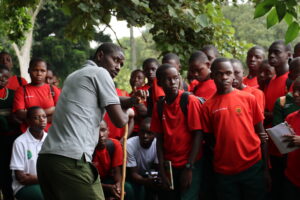
Nature is one of the greatest gifts we share. From the fresh air in our parks to the beauty of beaches, forests, rivers, and gardens, the environment provides life, peace, and resources for all people. Spending time outdoors reminds us of the importance of caring for the world around us. Every tree, stream, and living creature plays a role in maintaining the balance of life, and protecting nature begins with the choices we make each day. At St. Adolf Holy Cross Parish, Kanyabacope, our Laudato Si club is vibrant with nature activities. We gather at the Parish, outstation churches, and small Christian communities to care for our environment, inspired by the faith and St. Adolf’s reverence for nature. Our Club stands out by its location in the very vicinity where St. Adolf Mukasa Ludigo was born in Kyenjojo.
We believe one simple yet powerful way to respect nature is to keep our surroundings clean. Littering harms wildlife, pollutes water sources, and damages the beauty of public spaces. Whether visiting a park, walking along a beach, or hiking through a forest, we should always dispose of waste responsibly and encourage others to do the same. Picking up litter, even when it is not our own, is a small act that can make a big difference in preserving the environment for future generations. One of our monthly club activities is cleaning the environment and learning new ways to manage sanitation in our parish churches and families. This has improved hygiene in many of our families in the parish.
Gardening and planting trees are also meaningful ways to support the environment. Choosing native plants is especially beneficial because they naturally adapt to local conditions, require less water, and provide food and shelter for birds, butterflies, and other wildlife. By planting wisely, communities can conserve resources while strengthening local ecosystems. We have seen this impact on the beauty of our parish, and now many people are beginning to carry this value to their homes.
Environmental care becomes even more effective when people work together. Families, schools, churches, and neighborhoods all play a role in protecting our common home. Sharing ideas with friends and relatives, joining local clean-up campaigns, or organizing recycling and waste-reduction activities can inspire positive change in the community. When individuals unite for a common purpose, their combined efforts create a stronger and healthier environment. That’s what is happening at St. Adolf.

Both young and old are encouraged to participate in caring for nature. Children can learn simple habits such as avoiding littering and saving water, while adults can lead by example through responsible environmental practices. Every generation has a responsibility to protect the earth and ensure that future generations inherit a safe and beautiful world.
Caring for the environment is not about perfection; it is about steady progress. Small actions carried out consistently, such as reducing waste, planting trees, reusing materials, and keeping public spaces clean, can lead to meaningful and lasting change. Together, we can protect the place we all share, one action at a time, and as we approach Uganda Martyrs Day, we, as a club named after St. Adolf and from the home area of St. Adolf, will do more to plant the Uganda Martyrs trees and encourage farming as exemplified by St. Adolf Mukasa Rudigho Abwooli of Myeri.
Profile of St. Adolf Mukasa Ludigo
St. Adolf Mukasa Ludigo was a Mutoro, born in Musazi (katoosa) village in Myeri or Bufonjo locality in Menge county of Toro. His father was Bamwesekera, and his mother KIyote. The Baganda raiders captured him and took him to King Muteesa 1’s palace. At the palace, Ludigo was in charge of the gardens where the pages were supposed to work. The name Ludigo was a nickname because he resembled a Bunyoro chief named Ludigo.

At the palace, Ludigo was surprised and very much impressed by the good behavior of the catholic pages. Thus, he received Catholic instruction from Joseph Mukasa, who also introduced him to the Catholic missionaries for further instruction. When the missionaries fled to Tanganyika in 1882, Ludigo went to Kaggwa’s home, which became a new mission instead of Lubya.On finding out that the number of converts was growing every day and the people had to eat, Ludigo went to the kitchen to help Kaggwa’s wife and other volunteers. He left the instructions to Andrew Kaggwa for most of the time.
Ludigo was baptized very soon on Monday night, November 16, 1885, and got the name Adolphus. This was the day that followed the killing of their master, Joseph Mukasa. St. Adolf Mukasa Ludigo anticipated his arrest and death, so he was very happy and put on his best as if he was preparing for a party. Over this beautiful tunic, he wore his beautiful antelope skin, reserved for special occasions. He was arrested with other Christians on Wednesday morning and taken to Namugongo, where he was burnt to death on Ascension Day, Thursday, June 3rd, 1886, at the age of twenty-four. St. Adolf Mukasa Ludigo is the patron of farmers and herdsmen, and our patron saint.