By Laudato Voices | Digital Optimization and the Role of our Laudato Si’ Clubs | Dec 4, 2025
Uganda is one of the most agrarian countries in sub-Saharan Africa. For millions of Ugandans, agriculture is both a way of life and the backbone of the economy. The latest Agricultural Annual Survey shows that about 68.1% of Uganda’s workforce is in agriculture, which contributed around 24.1% to the national GDP in 2021/22 (Uganda Bureau of Statistics [UBOS], 2022; Ministry of Agriculture, Animal Industry and Fisheries [MAAIF], 2025). Because of this, any move toward sustainable development and environmental care must focus on agriculture, especially by using modern tools and involving young people.
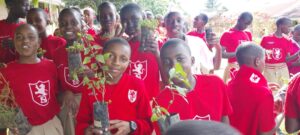
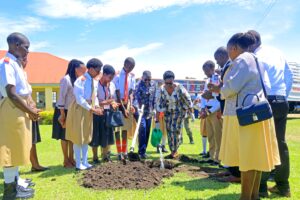
The Laudato Youth Initiative understands this need. By starting Laudato Si’ Clubs in schools, parishes, dioceses, and communities across Uganda, the Initiative has built a network of young leaders focused on faith and action by advancing the notion of integral ecology through agroforestry programs in Luweero, sustainable farming with St. Adolf Parish, Fort Portal Diocese, The Laudato Si Green Festival in Eastern uganda and environmental care throughout all our Laudato Si Clubs in schools that are actively engaged in Faith and action activities like tree planting, innovations for ecological conservation, raising voices (Laudato Voices) through talent, media and other strategic advocacy programs. Recently, the Initiative has also worked to add eco-friendly practices, regenerative agriculture, and youth-led environmental education to school programs (Laudato Youth Initiative, 2025).

Uganda is dealing with both environmental problems, such as deforestation, flooding, and soil erosion, changing weather patterns, drought, and challenges like poor waste management that is harming our productive soils and water etc. Enhancing innovations in regenerative waste management and Using digital tools in agriculture, along with youth involvement through Laudato Si’ Clubs, offers a promising way forward. The following sections highlight how Uganda’s farming situation, new technologies, and the values of Laudato Si’ Clubs come together.
Agriculture in Uganda: Importance and Challenges
Agriculture is still at the heart of Uganda’s economy and people’s daily lives. The Ministry of Agriculture reports that “about 70% of the country’s working population is engaged in agriculture,” and that the sector accounts for over 33% of export earnings. It also supports food security and income for most rural families (MAAIF, 2025). Even though Uganda has rich soils, a good climate with two rainy seasons in many areas, and ample arable land, only about 35% of the land is farmed (Trade.gov, 2023; MAAIF, 2025). This means much of the land is not used, and with traditional farming methods, little mechanization, and uneven use of inputs, productivity stays low and environmental problems like land degradation and deforestation continue (Trade.gov, 2023).
As the global climate becomes less predictable, many Ugandan farmers who depend on rain-fed agriculture are at risk from droughts, floods, or crop failures. To protect their livelihoods and food security, it is essential to adopt smarter, more resilient, and sustainable farming methods.

Digital Optimization and Smart Agriculture: What It Means for Uganda
Digital optimization in agriculture, also known as smart farming or climate-smart agriculture, uses technologies like sensors, IoT (Internet of Things), data analysis, remote sensing, and mobile decision tools. These help farmers use resources more effectively, increase yields, adapt to changing weather, and reduce their environmental impact.
Recent research in Uganda shows how these innovations can help. For example, a new “smart IoT framework” for maize farming in Central Uganda uses affordable sensors to track soil moisture, rainfall, and other conditions. This helps farmers grow crops in ways that save resources and handle climate change (Nomugisha & Mwebaze, 2025). These technologies let smallholder farmers, who make up most of Uganda’s farmers, make real-time decisions about when to water, how much fertilizer to use, and when to plant or harvest. This reduces waste, saves water, and boosts productivity.

If these digital tools are used more widely, they could help Uganda make better use of its rich farmland and good climate. They also help farmers cope with weather changes, pests, and climate shifts, while reducing environmental harm by using resources more efficiently.
Laudato Si’ Clubs: Youth, Faith, and Ecology in Action
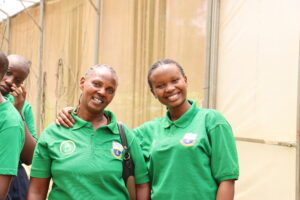
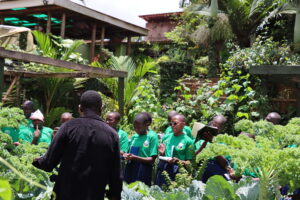
Laudato Si’ Clubs are adding an important moral and social aspect to this change. By involving young people in schools and parishes, and communities, the Clubs encourage ecological awareness, spiritual growth, and hands-on action. The Laudato Youth Initiative says its clubs mix traditional ecological knowledge with modern methods, supporting regenerative farming, waste management, water saving, and learning about renewable energy (Laudato Youth Initiative, 2025).

Bringing together faith, education, and care for the environment helps young people view agriculture as more than just a job. It becomes a calling that looks after the land, supports communities, and honors creation as a gift. In our Country, Uganda, where most people depend on farming, teaching young people this sense of care and responsibility lays a strong foundation for sustainable growth.
By teaching students about the environment and good practices early, Laudato Si’ Clubs help shift attitudes from short-term, harmful farming to long-term care and sustainability.
Bridging Digital Innovation with Laudato Si’ Values: A Vision for the Future
Bringing together digital tools and the values of Laudato Si’ Clubs creates a new vision for Ugandan farming, focused on three main goals: sustainability, dignity, and caring for the environment.
1. Sustainability and Productivity: With data-driven methods like soil sensors, weather forecasts, and precision farming, small farmers can grow more food, improve food security, and lower their impact on the environment. Over time, higher yields can help families escape poverty and support the country’s food needs.

2. Youth Empowerment and Leadership: Laudato Si’ Clubs are helping young people become leaders in caring for the environment and their communities. They gain both technical skills and strong values, which prepare them to lead sustainable farming, community projects, and even start green businesses.

3. Ecological Stewardship and Moral Witness: By seeing creation as a gift and encouraging a culture of care, Laudato Si’ Clubs help build communities that balance progress with protecting the environment. Digital tools make these efforts practical, while faith and community keep them lasting.

For example, a school Laudato Si’ Club in central Uganda might use moisture sensors to manage a community vegetable garden. When it is dry, the system tells club members to water only when needed, saving water and student effort. After harvest, the vegetables are shared with families or sold at local markets, which improves nutrition, generates some income, and demonstrates how to use land responsibly.
As the Laudato Youth Initiative looks towards forming stewards of the future who will enforce a holistic, just, and sustainable agriculture
Uganda’s agriculture is at a turning point. The country has the resources and a young population that can help turn farming into a modern, strong, and sustainable system. Digital tools offer practical ways to make this change, while Laudato Si’ Clubs provide the values and community support needed to sustain it.

By leveraging technology, supporting young leaders, and focusing on ecological and moral values, Uganda can build an agricultural system that feeds its people, respects the environment, and ensures a better future for future generations.
If you would like to help us expand Laudato Si’ Clubs across Uganda. Email us at laudatoyouthinitiative@gmail.com
References
Laudato Youth Initiative. (2025, September 22). Integrating Environmental Education into Uganda’s National Curricula: Unleashing Innovation for Agriculture, Biology, and Livelihoods. Retrieved from https://laudato-youthinitiative.org/2025/09/22/integrating-environmental-education-into-ugandas-national-curricula-unleashing-innovation-for-agriculture-biology-and-livelihoods/
Ministry of Agriculture, Animal Industry and Fisheries. (2025). Agricultural sector potential and performance in Uganda.
Nomugisha, G., & Mwebaze, J. (2025). Smart IoT Framework for Climate-Resilient and Sustainable Maize Farming in Uganda.
Trade.gov. (2023, October 13). Uganda — Agricultural Sector. Country Commercial Guide. U.S. International Trade Administration.
Uganda Bureau of Statistics. (2022). Uganda Annual Agricultural Survey 2021/22.