Laudato Voices | Implementing Catholic Social Teaching through Integral Ecology | April 29, 2026
In Laudato Si’, Pope Francis presents a powerful vision: care for the environment, care for people, and care for culture are inseparable. This vision, known as integral ecology, calls Christians to live out Catholic Social Teaching in ways that respond concretely to both the “cry of the earth” and the “cry of the poor.” Nowhere is this vision becoming more tangible and compelling in Africa, especially in Uganda, through the lived experiences of the majority youth population and grassroots initiatives.
Integral ecology in the African context
In many African societies, the idea that “everything is connected” is not new; it is embedded in cultural traditions. Communities have long understood that land, people, ancestors, and future generations exist in a delicate relationship. The African worldview reflects what Laudato Si’ teaches: humans are stewards, not owners, of creation.
In Uganda today, however, this harmony is under strain. Communities face deforestation, floods, land degradation, and poverty. Young people witness how environmental destruction directly affects food security, livelihoods, and mental well-being. Yet these challenges are not met with despair alone. Across the country, stories are emerging of young people translating faith into action, stories that reveal integral ecology not as theory but as lived reality.
Real stories of faith in action from the Laudato Youth Initiative
1. Tree planting as restoration and survival
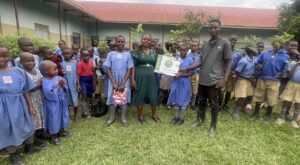
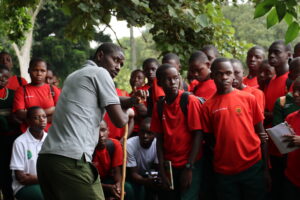
In many Ugandan communities, cutting trees is often driven by poverty; people depend on charcoal burning or timber for income. In response, youth involved in ecological programs have begun planting indigenous and fruit trees. We are running a one-million-tree planting drive through our Laudato Si Clubs. These are not just environmental acts; they restore biodiversity, provide food, and create alternative livelihoods. One young participant explained that fruit trees are protected because they feed families and generate income, showing how ecological care and human dignity go hand in hand.
2. Sarah’s story: from awareness to leadership
A Laudato Youth Leader and student named Sarah, formed through ecological mentorship programs, describes how caring for nature deepened her sense of self and faith. She moved from simply learning about the environment to actively planting trees, organizing clean-ups, and inspiring others. Her journey reflects a core principle of Catholic Social Teaching: transformation begins with personal conversion but must extend outward to community impact.
3. Responding to climate suffering
In regions affected by floods and extreme heat, young people are documenting environmental damage and raising awareness through digital storytelling. These efforts highlight how climate change disproportionately affects the poor, especially women and children.This is integral ecology in action: recognizing that environmental injustice is also social injustice.
4. Linking ecology and mental health
Our Laudato Youth Leader, Immaculate, has also identified a visible impact of environmental degradation on mental health. From her career background as a teacher, she says, students report anxiety and reduced concentration due to extreme heat and ecological instability. Addressing environmental issues, therefore, becomes a way of caring for the whole person, not just the ecosystem.
The Laudato Youth Initiative: a living model of integral ecology
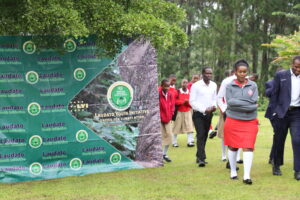
At the heart of many of these stories is the Laudato Youth Initiative, a Catholic, youth-led initiative in Uganda that translates faith into concrete ecological and social action.
Formation of young ecological leaders
Through Laudato Si’ Clubs in schools, parishes, communities, and universities, the initiative trains young people to integrate:
- environmental stewardship
- social responsibility
- spiritual values
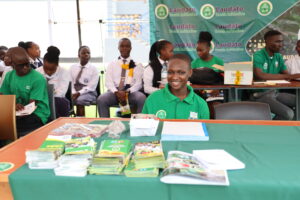
These clubs turn classrooms into spaces of action through debates, school gardens, recycling projects, and climate advocacy, learning from elders’ stories.
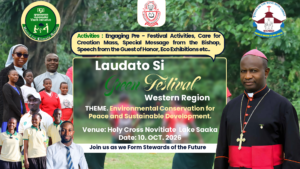
The Laudato Si Green Festival: faith meets innovation
One of its flagship events, the Laudato Si Green Festival, brings together youth, researchers, and faith leaders to showcase solutions such as:
- climate-smart agriculture
- renewable energy
- waste management systems and Mentorship from Elders
This event embodies integral ecology by uniting science, culture, and spirituality in one space.
The One Million Tree Planting Drive
This nationwide campaign illustrates how a single action can address multiple dimensions of Catholic Social Teaching:
- restoring ecosystems
- improving food security and Sustainability
- reducing poverty
- strengthening community resilience
Tree planting becomes both a symbol and a practical tool of hope.
Building community and solidarity
Our initiative also promotes interfaith dialogue, community clean-ups, and ecological education rooted in African traditions. It brings together people across religious and social divides, reflecting the CST principle of solidarity.
A grassroots movement with systemic impact
From parishes to national networks, the Laudato Youth Initiative is helping form a broader ecological initiative in Uganda. It contributes to collaborations such as the Uganda Laudato Si’ Consortium, which unites organizations to address climate justice collectively.
Integral ecology made visible
The stories show that integral ecology is not an abstract theological idea; it is a way of life. It is seen in a student planting trees for her community, in youth documenting floods to advocate for justice, and in faith communities rethinking how they live, produce, and consume.
The work of the Laudato Youth Initiative demonstrates that implementing Catholic Social Teaching through integral ecology means:
- uniting faith with action
- linking environmental care with human dignity
- empowering communities, especially the young
- transforming both lifestyles and systems
In this way, the Laudato Youth Initiative is not simply inspired by Laudato Si’; it is a concrete and living implementation of its vision, embodying integral ecology in the everyday lives of African communities.