Across Africa and particularly here in Uganda, the impacts of climate change are no longer distant scientific predictions; they are lived realities. From prolonged droughts affecting cattle keepers in Karamoja and Ankole, to rising water levels displacing families around Lake Victoria, to frequent urban flooding, mudslides in bududa and the rapid degradation of wetlands in Kampala, Gulu, and other regions, the effects are unmistakable.
Even our rivers are signaling distress. The Laudato Si’ Club at Nyakasura School, during its visit to the Karangura Hills, recently reported concerns about River Mpanga, tracing its source and seeking to understand why its water levels are steadily declining. These experiences paint a clear picture: the crisis is here, and it is personal.

In the face of these realities, many young people are asking a question that is both urgent and necessary: What must I do to create a meaningful climate change impact?
The answer, though often overshadowed, remains profoundly simple: START AT HOME.

Changing the Home, Changing the World


Facing Doubt with Courage
Let us talk about the African Knowledge Systems: The Foundation of Climate Solutions
Climate solutions in Africa are deeply rooted in our cultural and spiritual realities, which place the individual at the heart of the community. Participation in community life for the common good was not optional; it was a responsibility. My mother often tells me how, in her youth, people would clear roads and trenches, plant trees, and maintain tidy homes not for recognition or payment, but because it was their duty to the community and that inspires me to volunteer for climate action.
Today, these stories may seem like memories of a distant past, but they carry timeless lessons. We must move beyond nostalgia and reimagine ways to embrace these values in our modern context. Africa is blessed with deep reservoirs of ecological wisdom, a gift we can bring to the world. This wisdom also makes our interpretation of Laudato Si’ uniquely African, as it combines spiritual insight, communal responsibility, and environmental stewardship. For instance, the:
Traditional Buganda clan systems that protected forests
Among the Baganda, each clan historically safeguarded specific natural sites, including forests, groves, and culturally important trees. These sacred spaces were protected through clan norms, taboos, and cultural sanctions. Some of Uganda’s tallest and oldest trees owe their survival to these systems of stewardship. For example, during a recent visit to the historical trees at Munyonyo linked to the Uganda Martyrs, it is evident how traditional respect helped preserve these monumental natural structures for centuries. These practices demonstrate that environmental conservation has always been a deeply cultural value in Buganda.

Acholi communal land management practices
In Acholi culture, land is traditionally owned communally, and its use is regulated by elders who ensure that grazing, farming, and settlement patterns do not degrade the environment. These practices emphasize collective responsibility, not individual exploitation. As we prepare for the forthcoming National Youth Conference in Gulu, this Acholi land ethic offers an important lesson: sustainable resource management requires community consensus, shared values, and a long-term view of land as a gift meant for all generations.

Banyankole cattle rotation methods that preserved grazing lands
Among the Banyankole, pastoralists practiced cattle rotation—moving livestock from one grazing area to another to allow previously grazed fields to recover. This ensured soil fertility, reduced erosion, and prevented overgrazing. The Jubilee Year in the Church also reminded us of the biblical principle of “letting the land rest.” It is remarkable that this concept exists both in Scripture and in local culture. The synergy between Banyankole ecological wisdom and Church teaching emphasizes that sustainable land care is both cultural and spiritual.

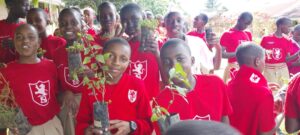
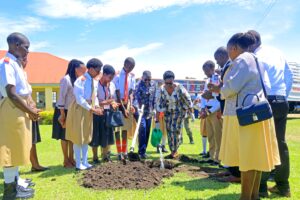
This activity not only restores the local ecosystem but also serves as a powerful educational tool, communicating to the community especially young people how even small, intentional actions can protect biodiversity and enhance climate resilience.
Indigenous seed preservation among the Iteso and Bagisu
The Iteso and Bagisu communities have long preserved indigenous seeds such as millet, sorghum, yams, bananas, and traditional beans—seeds that are naturally resilient to local pests, diseases, and climate variations. Today, however, we are witnessing the decline of these indigenous crops. Communities lament the loss of traditional foods, the erosion of cultural food security systems, increased vulnerability to hunger, and the introduction of commercial seeds that are often expensive and prone to disease. Preserving indigenous seeds is therefore not only about heritage but about safeguarding Uganda’s food sovereignty.
Wetland respect and taboos among communities in Busoga and Bunyoro
In Busoga and Bunyoro, wetlands were traditionally protected as sacred ecosystems. Cultural taboos prohibited destroying papyrus, contaminating water sources, or draining wetlands for farming. These norms preserved biodiversity and ensured reliable water sources for generations. Yet today, these values are under threat as wetlands are encroached upon for agriculture, bricklaying, and settlement.

Standing in this gap, Laudato Si’ Clubs are taking leadership roles, inspiring a return to ecological responsibility.
For example, our Laudato Si Club at Nyakasura School is championing wetland conservation in the Tooro region and across Uganda. Their partnership with NRDI (Nature & Resilience Development Initiative) under the Young Voices for Wetlands and Climate Action campaign empowers young people to map, protect, and restore wetlands. Their participation in the 2nd National Wetlands Dialogue marks a critical investment in forming future leaders who will champion the protection of Uganda’s wetlands. Their work shows that “every effort counts”—and that young voices can shape national environmental policies and action.


In Busoga our Laudato Si Club at Holy Cross Lake View S.S.S is taking clear strategies in research and innovation towards wetland conservation and clean water are a right to all children. They are also working with their school to advance better water management practices.

These practices are not relics of the past; they are models for the sustainable future we urgently need.
In my view, modern climate solutions like solar energy, climate-smart agriculture, water harvesting, become more impactful when blended with this indigenous knowledge.
The Role of our Laudato Si’ Clubs in institutions and Communities

Real climate impact requires courage the courage to begin, the courage to persist, and the courage to believe in the power of local action. Uganda’s future rests in the hands of young people who can weave together ancestral wisdom and modern innovation, caring for the land with both scientific understanding and deep spiritual conviction.

When young people act intentionally rooted in local knowledge systems, open to learning from diverse schools of thought, and guided by models such as St. Adolf Ludigo and St. Francis of Assisi their impact goes beyond simply joining an initiative. Supported by community structures like our Laudato Si’ Clubs, they become stewards of creation and stewards of the future, ready to unite for climate action and safeguarding Mother Earth in response to the very invitation Pope Francis extends to us in Laudato Si’.

In doing so, as Laudato Youth, we offer the world the gift of our lived experience an authentic African interpretation of Laudato Si’ that reflects the wisdom, resilience, and hope of our communities. Through this contribution, we empower young people to shape a more sustainable, resilient, and hopeful future for our Communities, Our Pear of Africa and home Uganda, for Africa, and for the entire world at large. Local solutions with a global impact.