By Laudato Voices | Culture and Environment in Uganda | August 2, 2025
Uganda is a country blessed with rich cultural traditions and a beautiful natural environment. As young people inspired by the spirit of Laudato Si’, we believe that caring for culture and caring for the environment are inseparable responsibilities. Our forests, wetlands, rivers, and mountains are sources of livelihood and part of our identity as Ugandans. In the same way, our traditions, faith, music, and communal values shape how we relate to creation and to one another.
As Laudato Youth, we have witnessed how culture and environment work together in everyday life. Many communities in Uganda depend on agriculture, fishing, and livestock keeping. This fact defines explains the our choice of patronage in St. Adolf Mukasa Ludigo (Patron Saint of Farmaers and Hardesmen). Crops such as matoke, cassava, millet, beans, and coffee are central to our economy and cultural identity. Traditional food-sharing practices continue to strengthen family and community bonds. At the same time, the land that provides this food must be protected from degradation and climate change.
Uganda is home to more than 45 ethnic groups, each with unique languages, dances, customs, and spiritual traditions. In many cultures, nature is respected as sacred. Forests, rivers, and hills are connected to ancestral memories and community rituals. For example, bark cloth made from fig trees has long been used in Buganda culture for ceremonies and cultural expression. These traditions remind us that environmental conservation is not a foreign idea but part of our African heritage.
Our Christian faith also strengthens our commitment to environmental protection. The example of the Uganda Martyrs continues to inspire young people across the country. The Uganda Martyrs demonstrated courage, faith, sacrifice, and moral responsibility. Every year, thousands of pilgrims travel to Namugongo Martyrs Shrine to honor their witness. As Laudato Youth, we believe the message of the martyrs can also inspire us to defend creation with courage and responsibility. Just as they stood firm for faith and truth, we are called to stand firm in protecting the environment for future generations. In future we will be happy to see Dioceses preparing pilgrimages to Namugongo also engaging in environmental stewardship like planting Martyrs Trees or “Uganda Martyrs Memorial Forests,” as way to celebrate Uganda Martyrs Day and the Legacy of the Uganda Martyrs. Imagine if pilgrims started their journey to the Martyrs Shrine by planting trees or even planting trees at stop over points that they make. The initiative would set an inspirational tone, that can invite the faithful to honor the Uganda Martyrs not only in prayer, but also through lasting ecological responsibility that will benefit future generations. Seeing environmental action as an expression of faith in action, rooted in the Church’s teaching on care for the environment is what the Uganda Martyrs did. Each of them cared for the environment. Uganda Martyrs Day can be seen as a pilgrimage of Green Hope.

Because environmental challenges in Uganda continue to increase. Deforestation, wetland destruction, poor waste management, and climate change are affecting communities across the country. Floods and prolonged droughts have disrupted agriculture and threatened food security. Pollution of lakes and rivers also affects human health and biodiversity. Pope Francis reminds us in Laudato Si’ that “the earth, our home, is beginning to look more and more like an immense pile of filth” (Francis, 2015, para. 21). This message challenges us to act urgently.
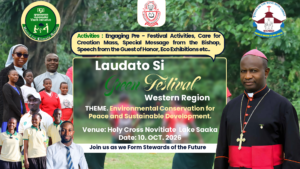
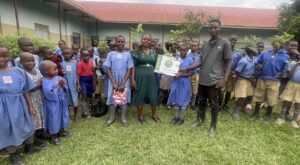
Through our Laudato Youth Initiative and Laudato Si Clubs in Schools, Parishes and Dioceses, we have participated in activities that connect ecological action with faith and culture. These include tree planting campaigns to commemorate the Uganda Martyrs and our One million Tree Planting Drive, environmental education, Laudato Si Green festivals are continuing to evolve, and community clean-up exercises. The Laudato Si’ Clubs established in schools and parishes encourage young people to become environmental stewards while remaining rooted in African values and Christian teachings (Laudato Youth Initiative, 2024).
One of the most inspiring activities has been the “One Million Tree Planting Drive,” which promotes the planting of indigenous and fruit trees to restore ecosystems and improve food security (Laudato Youth Initiative, 2024). We believe such efforts are important because trees provide shade, rainfall protection, medicine, and habitat for wildlife. Planting trees is therefore both an environmental and cultural responsibility.
As young Ugandans, we recognize that protecting the environment also means protecting our future. When wetlands disappear, when forests are destroyed, and when climate change intensifies, it is communities and young people who suffer the consequences most directly. This is why we continue to advocate for sustainable living, environmental justice, and ecological awareness.
Its important to note that Culture and environment in Uganda are interconnected. Our traditions, faith, and communal values teach us to respect creation and care for one another. Inspired by the teachings of Laudato Si’ and the witness of the Uganda Martyrs, we commit ourselves to building a society that protects both cultural heritage and the natural world. We believe that through unity, faith, and action, Uganda can become a model of ecological responsibility and cultural pride for future generations.
References
Francis. (2015). Laudato Si’: On Care for Our Common Home. Vatican Publishing House.
Laudato Youth Initiative. (2024). About the Laudato Youth Initiative. Retrieved from Laudato Youth Initiative