Immaculate Kisembo | Mental Health and Mentorship | Thursday, April 2, 2026
Mental health among young people is best nurtured not only through clinical interventions, but also through consistent, helping young people build meaningful relationships. What mentorship does is to provide a practical and powerful pathway for supporting youth, offering guidance, emotional safety, and a sense of belonging. When young people are accompanied by mentors who listen, encourage, and walk with them through life’s challenges, they are more likely to develop resilience, confidence, and emotional stability. Evidence shows that supportive mentoring relationships significantly reduce anxiety and promote positive development among youth (Rhodes, 2020).

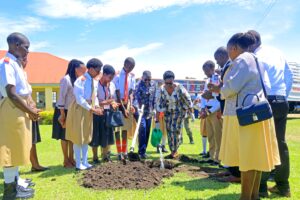
Our approach in the Laudato Youth Initiative deepens this understanding by linking mental health to purpose and environment. We emphasizes integral ecology, the idea that personal well-being, community relationships, and care for the environment are interconnected. Our young people in our different Laudato Si Clubs are engaged in practical ecological actions and many often experience, reduced stress, and stronger social connections. Activities such as tree planting, community clean-ups, and environmental restoration are not only acts of stewardship but also practical tools for improving mental well-being, as nature exposure has been shown to enhance mood and reduce psychological distress (Bratman et al., 2019).

A strong mentorship environment is therefore one that is intentional, inclusive of boys working with girls, and is guided with a purpose-driven model creates safe spaces where young people feel heard and valued while equipping them with life skills and opportunities to contribute to their institutions, families and communities. Here mentors play a critical role in helping our young people connect their personal growth to broader ecological responsibility, fostering both inner resilience and outward action. I have witnessed first hand experiences of this when dealing with our young people in Laudato Si Clubs.

The month of April, celebrated globally as Earth Month, offers a good opportunity to integrate mentorship and mental health through ecological engagement. During this time, if well organized youth programs are planned in institutions to intentionally combine mentorship sessions with environmental activities, creating spaces for reflection, dialogue, and action. Such experiences help young people process their emotions, build supportive relationships, and develop a sense of purpose rooted in care for the planet and one another (WHO, 2022).

My argument remains mental health, must therefore, be understood as relational and ecological. By nurturing mentorship and actively engaging young people in caring for their environment, we create a holistic pathway to well-being. This is the vision spearheaded by the Laudato Youth Initiative: we believe forming a generation of young people who are mentally resilient, socially connected, and empowered to protect our common home is empowering young people to lead a balanced lifestyle that enables the to build health social connections, balance and academics with social and spiritual life etc.

References
Bratman, G. N., et al. (2019). Nature and mental health: An ecosystem service perspective. Science Advances, 5(7),
Rhodes, J. E. (2020). Older and wiser: New ideas for youth mentoring in the 21st century. Harvard University Press.
World Health Organization. (2022). Mental health and well-being for adolescents.