Laudato Voices | Mining and Quarrying in Local Communities | February 8, 2026
Mining and quarrying supply vital materials for construction and economic growth in Uganda. Without proper regulation, these activities can damage the environment and harm communities that rely on local natural resources.

Karangura Hills and River Mpanga: A Local Example
In western Uganda, the Karangura hills in Kabarole District are a major source of sand and stone for local construction, particularly along River Mpanga, which flows from the Rwenzori Mountains through Fort Portal and several districts before emptying into Lake George (Atuhaire, 2023; Monitor Reporter, 2016). Quarrying and sand mining often take place on or near riverbanks. Residents note that stone extraction sometimes involves heating rocks in the river to weaken them, increasing sediment and debris in the water (Polite, 2023).

The River Mpanga catchment provides drinking water, irrigation, livestock support, and hydropower for millions (Atuhaire, 2023; Polite, 2023). Ongoing quarrying and related activities have caused siltation and water pollution, turning the water brown and reducing flow, especially in dry seasons. This disrupts supply, threatens public health and economic activities, and has led to higher water treatment costs due to increased purification needs (Atuhaire, 2023; Monitor Reporter, 2016).

Local governments have banned mining near riverbanks to reduce pollution and have launched tree-planting and catchment protection programs (New Vision, 2023). However, many residents remain concerned about livelihoods linked to quarrying and emphasize the need for alternative economic opportunities to ease pressure on the river system (New Vision, 2023).

Environmental and Community Impacts of Quarrying and Mining
Research from other Ugandan districts links stone quarrying to environmental degradation, such as soil and vegetation loss, declining water quality, and air and noise pollution (Turyahabwe et al., 2024). These findings highlight that, without safeguards, economic benefits from mining can come at a high ecological cost.
Common environmental effects include:
• Land degradation: Vegetation and soil removal lead to erosion and loss of fertile land.
• Water pollution: Increased sediment and chemical contamination affect rivers and groundwater.
• Air pollution: Dust and machinery emissions reduce air quality and can harm respiratory health.
• Loss of biodiversity: Destruction of natural habitats forces plants and animals out of their native environments.
• Noise and vibration: Blasting and heavy equipment disturb both wildlife and local residents.
• Climate impacts: Removal of vegetation reduces carbon sequestration and increases greenhouse gas emissions.

These impacts highlight the importance of responsible mining, including environmental restoration and community participation, to achieve sustainable outcomes.
Connecting to Laudato Si and School Action
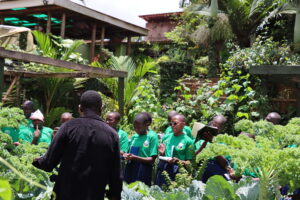
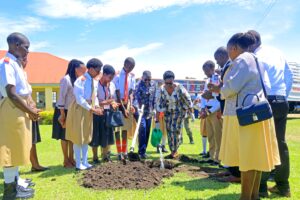
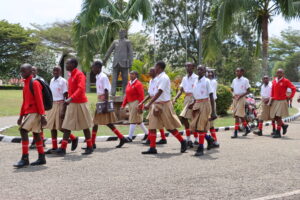
The Laudato Si Club at Nyakasura School encourages students to examine local ecological challenges and consider their responsibilities as stewards of creation. The effects of quarrying on River Mpanga and Karangura hills illustrate how human activities impact water, land, and community wellbeing, which are central themes in Laudato Si’, Pope Francis’s encyclical on caring for our common home. Through field walks and community engagement, students gain firsthand experience with environmental impacts and learn the importance of advocating for restoration and sustainable practices to protect essential ecosystems for future generations.
Towards Sustainable Solutions
Young voices from the Laudato Si Club at Nyakasura School say that to address the damage from mining and quarrying, stakeholders such as the government, communities, and institutions should:
• Enforce environmental regulations and protect buffer zones around watercourses.

• Support community education and alternative livelihoods that reduce reliance on destructive practices.

• Rehabilitate degraded sites through reforestation and ecosystem restoration.

• Promote responsible mining that balances economic needs with ecological protection.

By combining scientific knowledge with ethical stewardship, Ugandan communities can pursue a sustainable future that benefits both people and the environment.
References
Atuhaire, S. (2023, November 23). River Mpanga’s pollution, a threat to human life. The WASHFRONT PRESS. https://washfrontpress.com/river-mpangas-pollution-a-threat-to-human-life/
Monitor Reporter. (2016, November 25). River Mpanga pollution leaves residents thirsty. Daily Monitor. https://www.monitor.co.ug/uganda/news/national/river-mpanga-pollution-leaves-residents-thirsty-1677396
New Vision. (2023). Kabarole bans mining activities near River Mpanga. New Vision. https://www.newvision.co.ug/news/1502431/kabarole-bans-mining-activities-near-river-mpanga
Polite, M. (2023, October 26). Silting of River Mpanga and its tributaries, a life threat to the five districts of Toro sub region. Voice of Toro FM. https://www.vot.ug/silting-of-river-mpanga-and-its-tributaries-a-life-threat-to-the-five-districts-of-toro-sub-region/
Turyahabwe, R., Asaba, J., & Mulabbi, A. (2024). Environmental and socio-economic impact assessment of stone quarrying in Tororo District, Eastern Uganda. East African Journal of Environment and Natural Resources.