Immaculate Kisembo | Laudato Si and Mental Health | January 22, 2026
Laudato Si’, Pope Francis’s 2015 encyclical, frames the environmental crisis as ecological, social, economic, and human. It shows that environmental degradation and social suffering are connected and urges responses that protect both the Earth and vulnerable people (Pope Francis, Laudato Si’, 2015. Laudato Si’ calls for interdisciplinary reflection on environmental impacts, including effects on physical and mental health, especially for marginalized groups (Laudato Si’, 182-183). In Uganda, where climate change is a daily reality, this vision matches the experiences of girls and women, who face extra burdens from social, economic, and cultural inequities.
Climate Change, Mental Health, and Gendered Vulnerabilities in Uganda
Uganda’s agrarian economy makes weather changes, droughts, floods, and unpredictable rain directly impact livelihoods, food, and water access. These disruptions raise anxiety, trauma, and depression (World Health Organization, 2022, as cited in Immaculate Kisembo, 2025). Rural women and girls, responsible for water, family care, and gardens, face greater psychological strain from crop failure or migration, worsened by unequal access to education, income, and health care (Opiyo et al., 2015; Laudato Youth Initiative, 2025a).
Climate change in Uganda harms more than the environment. It weakens agency, prospects, and emotional stability, especially as support systems erode. Young people and women in rural areas often lack formal mental health support; community resilience and psychosocial care become vital (Kisembo, 2025).
Laudato Si’s Integral Ecology and Mental Well-Being
Laudato Si’ promotes integral ecology, stating that environmental harm and human suffering are connected and demanding responses that protect both. The encyclical asks us to understand environmental impacts in relation to health, economics, and culture (Pope Francis, Laudato Si’, 2015, 182-183). In Uganda, environmental changes often cause job loss, increased domestic work, school dropouts, and food insecurity, worsening mental health among girls and women.
Erratic rainfall reduces crop yields, forcing young girls to miss school to help at home and requiring women to find new sources of income or water (Kisembo, 2025). Worrying about family survival or education builds mental strain, yet this is rarely addressed separately from climate and social issues. Laudato Si’s holistic view urges organizations to address emotional and spiritual health alongside ecological needs, a view adopted by faith-based youth groups and rooted in Catholic Social Teaching.
The Laudato Youth Initiative and Mental Resilience
In Uganda, the Laudato Youth Initiative (LYI), a youth-led network inspired by Laudato Si’, connects environmental action with emotional and communal well-being. Through its Laudato Si’ Clubs in schools, universities, parishes, and communities, LYI creates places where ecological and mental resilience grow together (Laudato Youth Initiative, 2024).
In my previous article I highlighted how how climate instability affects mental health and helps communities build resilience. I further emphaised that disasters like floods and droughts destroy property and cause anxiety, trauma, and depression. These effects are strongest among youth and women who lose their livelihoods (Kisembo, 2025; Laudato Youth Initiative, 2025).
To respond, we at LYI use faith-inspired digital platforms, such as the “Digital Fireplace”, a space combining storytelling, music, and community dialogue, to offer emotional support and hope, especially to young girls grappling with climate anxiety and social pressures (Kisembo, 2025). These spaces draw on African communal philosophies like Ubuntu, reinforcing collective care and shared resilience, vital for girls and women navigating ecological and societal stress.
Laudato Si’ Clubs are safe places for girls to talk with peers and mentors about climate change, mental health, and their futures. Where formal psychological help is lacking, these clubs act as informal support networks, easing isolation and building emotional strength. By pairing environmental action with spiritual reflection, support, and culture, the clubs help girls turn climate anxiety into empowerment (Laudato Youth Initiative, 2025).
Illustrative Local Actions and Gendered Outcomes
Across Uganda, Laudato Si’-inspired activities demonstrate how ecological care can improve mental well-being while empowering girls and women:
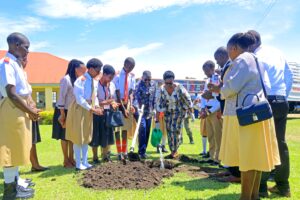
Laudato Si’ Clubs in schools involve many girls in sustainable agriculture, tree planting, and eco-innovation. These hands-on activities build skills, community ties, and self-efficacy. This helps ease the helplessness that comes with environmental degradation (Laudato Youth Initiative, 2024; 2025).
In regions with water scarcity, club members train families in climate-smart farming and water conservation. These projects improve food security and relieve household stress. This is especially important for rural women who often bear the burden of feeding families (Laudato Youth Initiative, 2025).
Parishes and dioceses host Laudato Si’ Green Festivals and prayer walks. These events provide spaces for reflection, support, and spiritual encouragement. This support is crucial for mental health in communities facing ecological uncertainties.
These actions show that Laudato Si’-rooted ecological spirituality tackles environmental damage and the mental burdens girls and women carry from climate change and inequality.
To build on this progress, it is vital for stakeholders, community leaders, faith organizations, policymakers, and international partners to actively support and invest in community-driven, gender-responsive approaches that address both ecological and mental health challenges. By amplifying the voices of girls and women, strengthening local initiatives like the Laudato Youth Initiative, and fostering partnerships across sectors, Uganda can model holistic solutions that protect both the environment and the well-being of the most vulnerable. Let us commit to advancing Laudato Si’s vision by championing integrated, actionable change that ensures a just and sustainable future for all.
References
Laudato Youth Initiative. (2024). About Us. https://laudato-youthinitiative.org/about-us/
Laudato Youth Initiative. (2025a). Mental Health and Climate Resilience in Uganda. https://laudato-youthinitiative.org/2025/08/11/mental-health-and-climate-resilience-in-uganda/
Laudato Youth Initiative. (2025). Mental health and ecological action: Healing through community and faith.
Opiyo, F., et al. (2015). Climate change and rural livelihoods in East Africa. (Climate effects linked to mental health in rural populations).
Pope Francis. (2015). Laudato Si’: On care for our common home. Vatican.
World Health Organization. (2022). Climate change and mental health.